Inland shipping: everything about inland vessels and transport by water
Every day, thousands of inland vessels sail Europe's rivers and canals, carrying sand, grain, fuel, chemicals and containers. Yet few people outside the sector really know inland shipping. In this guide we explain what inland shipping is, which inland vessels exist, what they carry, who makes the rules and how the sector is changing.
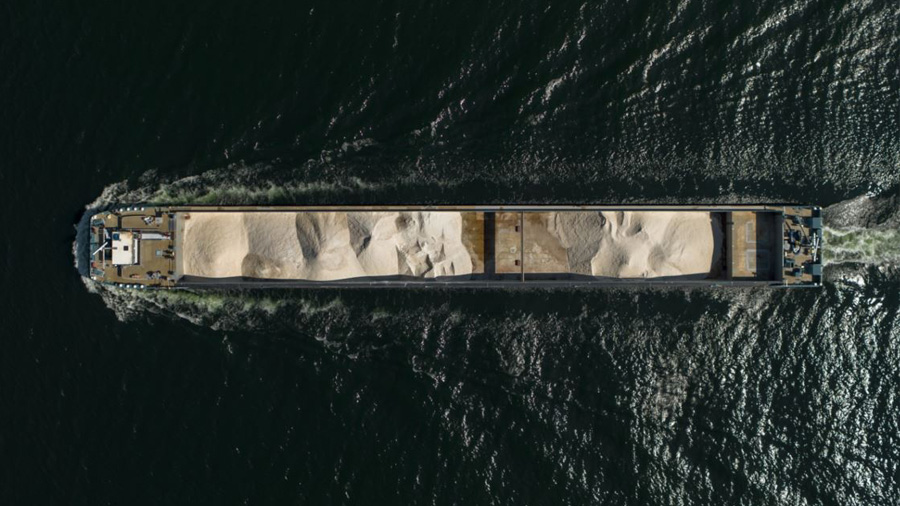
- Inland shipping is the transport of goods and people on rivers, canals and lakes, with vessels built for inland waters.
- Inland vessels range from the spits of around 350 tonnes to pushed convoys of more than 10,000 tonnes.
- On the Rhine alone, almost 285 million tonnes of goods were carried in 2024.
- The sector is cheap and efficient per tonne, but faces a shortage of boatmasters, low water and an ageing fleet.
- Remote operations and digitalisation help inland shipping to grow.
What is inland shipping?
Inland shipping, or inland waterway transport, is the transport of goods and people on inland waters: rivers, canals and lakes. That sets it apart from maritime shipping on seas and oceans. Inland vessels are built for these waters: they are long and narrow, have a shallow draught and fit into locks and under bridges.
Most inland shipping is freight transport. There are also passenger vessels, such as river cruise ships and ferries. In this guide we focus on freight, because that matters most to shippers and logistics chains.
Inland vessels: the main types and sizes
Inland vessels are usually classified according to the European CEMT classification, which indicates which vessels a waterway can accommodate. Each class has a typical vessel type with its own name, length and carrying capacity.
| CEMT class | Typical vessel type | Length | Carrying capacity (typical) |
|---|---|---|---|
| I | Spits (Freycinet) | 38.5 m | 250 to 400 t |
| II | Kempenaar | 50 to 55 m | 400 to 650 t |
| III | Dortmund-Ems canal vessel | 67 to 80 m | 650 to 1,000 t |
| IV | Rhine-Herne canal vessel | 80 to 85 m | 1,000 to 1,500 t |
| Va | Large Rhine vessel | 95 to 110 m | 1,500 to 3,000 t |
| Vb | Pushed convoy with two barges | 172 to 185 m | 3,200 to 6,000 t |
| VI and above | Larger pushed convoys | up to 285 m | 6,400 t and more |
Vessels also differ in what they carry. Dry cargo vessels carry bulk such as sand, gravel, ores and grain. Tankers carry liquids and gases, such as fuels and chemicals. Container vessels stack containers two to four layers high. Push barges have no engine of their own and are moved by a pusher, often in convoys of several barges. A coupled convoy is a motor vessel pushing a barge ahead of it.
Which goods are carried by inland vessel?
Inland shipping is strong in anything heavy, bulky and not urgent. The main cargo groups are:
- Building materials: sand, gravel, cement and aggregates, often for projects in and around cities.
- Energy and fuels: diesel, petrol, kerosene, LNG and other gases.
- Chemicals: liquid and gaseous raw materials for the chemical industry. Dangerous goods are subject to the ADN rules.
- Agricultural products: grain, seeds and animal feed.
- Ores and metals: raw materials for the steel industry and scrap.
- Containers: to and from seaports such as Antwerp and Rotterdam, and between inland terminals.
- Heavy and indivisible cargo: wind turbine components, transformers and machinery too large for the road.
The main waterways and ports for inland shipping
The Rhine is Europe's busiest inland waterway. According to the Central Commission for the Navigation of the Rhine (CCNR), around 284.5 million tonnes of goods were carried on the Rhine in 2024. The river links the seaports of Rotterdam and Antwerp with Germany, France and Switzerland, and Duisburg is Europe's largest inland port.
In Belgium, the Albert Canal, the Scheldt, the Meuse and the Ghent-Terneuzen canal are the main axes. Via the Scheldt-Rhine connection, the port of Antwerp is directly linked to the Rhine basin. In the Netherlands, the Waal, the Meuse and the Amsterdam-Rhine canal form the backbone. Other important waterways are the Moselle, the Main and the Danube, which is connected to the Rhine basin via the Main-Danube canal.
Seaports are crucial for inland shipping. A large share of the goods arriving in Antwerp and Rotterdam continues to the hinterland by inland vessel.
Who regulates inland shipping?
Inland shipping has a layered regulatory framework:
- European Union: sets the broad lines, such as professional qualifications, technical requirements and transport policy.
- Central Commission for the Navigation of the Rhine (CCNR): the world's oldest international organisation, with rules for the Rhine, such as the Rhine Police Regulations.
- CESNI: the European committee that develops the technical standards for inland vessels (ES-TRIN) and professional qualifications.
- ADN: the European agreement on the carriage of dangerous goods by inland waterways.
- National and regional authorities: such as De Vlaamse Waterweg in Flanders, Rijkswaterstaat and ILT in the Netherlands, and GDWS in Germany, which manage waterways and issue permits.
The benefits of inland shipping for shippers
For anyone moving goods, inland shipping has three big advantages:
- Low cost per tonne: one inland vessel carries the load of dozens of trucks with one engine and a small crew. A 1,200-tonne vessel replaces around 50 trucks; the largest vessels around 220.
- Lower CO2 emissions: a large Rhine vessel emits roughly three times less CO2 per tonne-kilometre than a heavy truck.
- Reliability and capacity: an inland vessel does not get stuck in traffic, and many waterways still have room for more traffic.
Read the full comparison in our guide to inland shipping vs. road transport. If you want to move freight from road to water yourself, our modal shift guide takes you step by step.
The challenges of inland shipping
The sector also faces major challenges:
- Shortage of boatmasters: many experienced boatmasters are retiring and too few new ones are joining. A shortage of 1,500 to 2,000 boatmasters is expected by 2035.
- Low water: in dry summers the Rhine runs low and vessels can load less, which pushes up costs.
- Energy transition: the fleet is ageing on average, and the switch to cleaner engines and alternative fuels requires major investment.
- Infrastructure: locks, bridges and quay walls need maintenance and expansion to absorb growth.
The future of inland shipping: remote operations and digitalisation
Inland shipping is digitalising fast. Vessels are increasingly connected to the shore, with AIS, sensors, cameras and a secure data link. That makes new ways of working possible.
The most important of these is remote operation. An experienced boatmaster sails the vessel as a Remote Operator from a Remote Operation Center (ROC) ashore, working together with the crew on board. That way vessels can keep sailing longer and, where the rules allow, with a smaller crew. In Flanders this is already permitted today; for the Rhine, the CCNR is working on the rules.
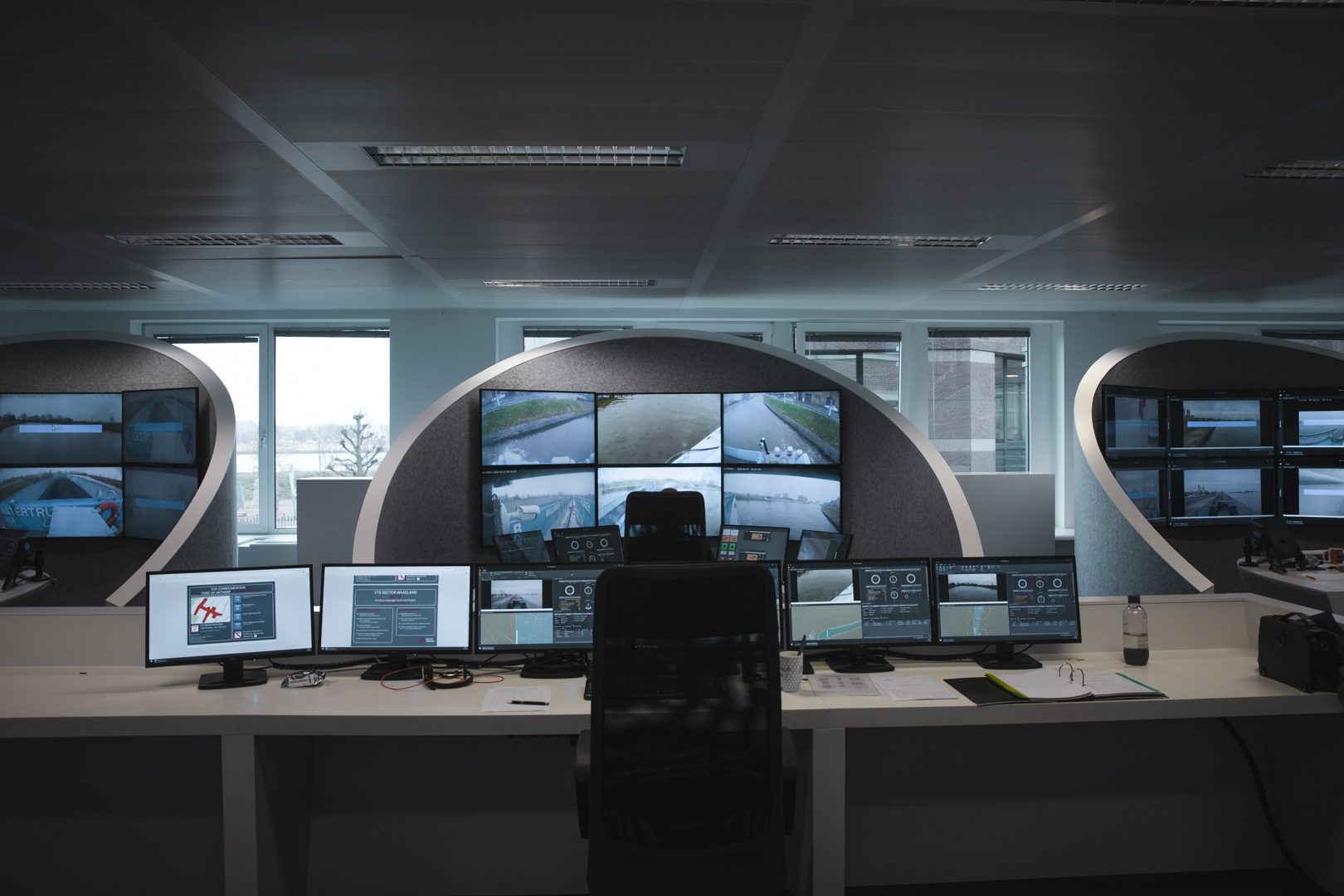
Seafar has been operating inland vessels remotely since 2019, on Belgian, Dutch and German waterways and on the Rhine. In doing so, we help to absorb the shortage of boatmasters and keep inland shipping affordable, so that more freight can move from road to water.
Learn more about inland shipping: our guides
- Inland shipping vs. road transport: transport costs, CO2 and capacity compared.
- Modal shift: how to move freight from road to water, in six steps.
- AIS tracking vs. vessel monitoring: what your fleet really needs to sail safely and report.
- Boatmaster jobs: working as a Remote Operator or on board.
Want to see how remote operations work? Visit one of our Remote Operation Centers or request a demo.
Frequently asked questions about inland shipping and inland vessels
What is inland shipping?
Inland shipping is the transport of goods and people on rivers, canals and lakes, with vessels built for inland waters.
How big is an inland vessel?
That depends on the type. A spits is 38.5 metres long, a large Rhine vessel up to 110 metres, and pushed convoys can be more than 180 metres long.
How many tonnes can an inland vessel carry?
From around 250 tonnes for a spits to 3,000 tonnes for a large Rhine vessel. Pushed convoys carry 6,000 tonnes or more.
What does inland shipping carry?
Mainly building materials, fuels, chemicals, agricultural products, ores, containers and heavy cargo that is too large for the road.
What is the difference between inland shipping and maritime shipping?
Inland shipping uses rivers, canals and lakes; maritime shipping uses seas and oceans. Inland vessels are narrower and have less draught, so they fit through locks and under bridges.
Who is allowed to operate an inland vessel?
A boatmaster with a valid inland navigation certificate. Additional requirements apply on the Rhine and some other waterways, and a Remote Operator is always a qualified boatmaster too.
Sources for this guide to inland shipping
- Central Commission for the Navigation of the Rhine, spring plenary press release (June 2025, in French)
- Central Commission for the Navigation of the Rhine and European Commission, Market Observation 2025
- CEMT classification of European inland waterways (Resolution No. 92/2)
- TNO for Topsector Logistiek, Meten op schepen (2023, in Dutch)
- Rijkswaterstaat, 1 vessel instead of 220 trucks (February 2025, in Dutch)
- Panteia: expected boatmaster shortage by 2035