Modal shift: how to move freight from road to water (2027 guide)
Europe wants more freight on rail and water, and less on the road. For shippers, that is no longer just a policy ambition: rising road costs, driver shortages, congestion and CO2 reporting all push in the same direction. This guide explains what modal shift means, why it matters now, what holds it back, and how to plan a shift from road to inland waterways step by step.
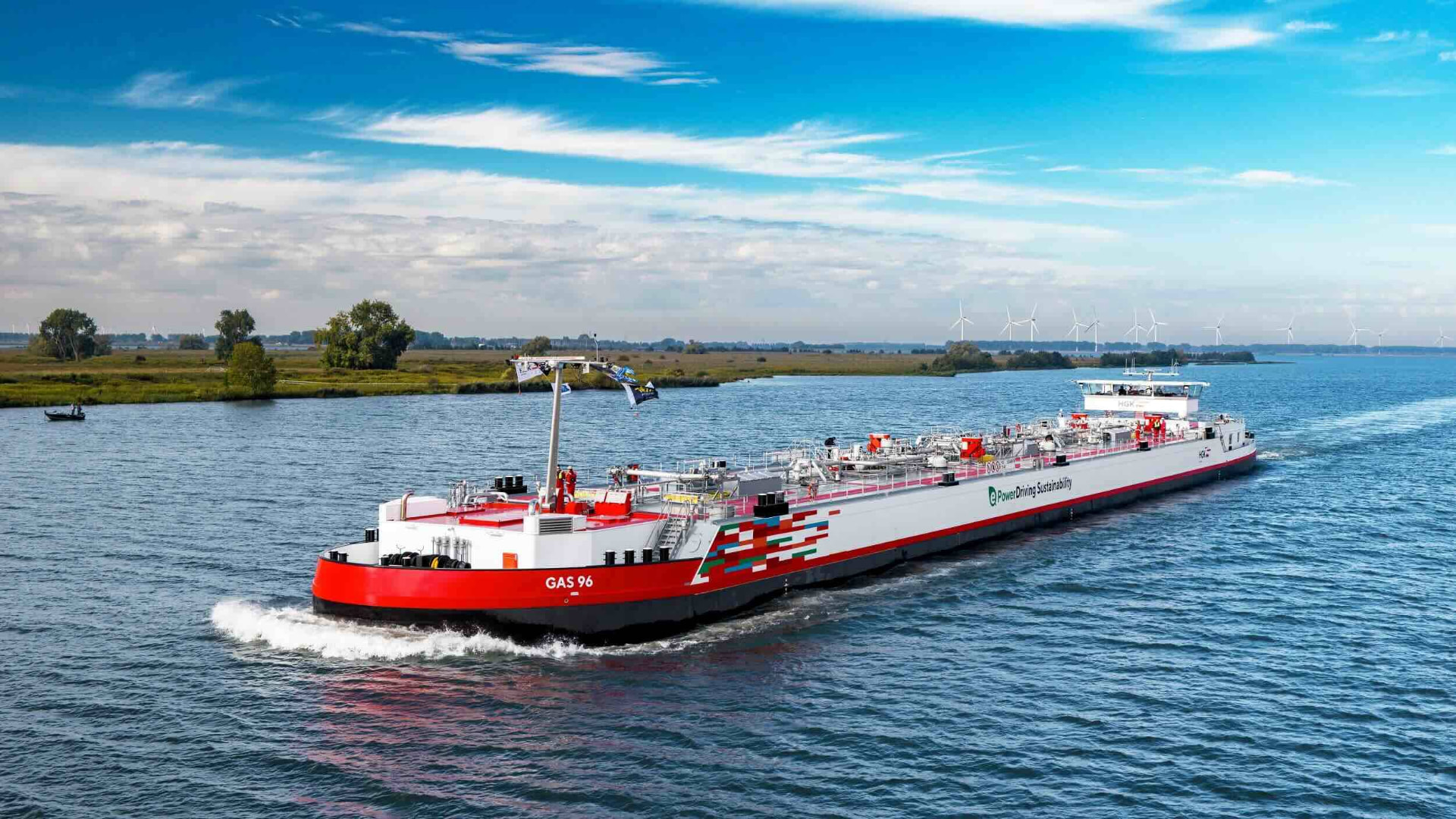
- Modal shift means moving freight from one transport mode to another, usually from road to rail or inland waterways.
- The EU wants inland waterway and short sea transport to grow by 25% by 2030 and by 50% by 2050.
- In reality, road still carried 78% of EU inland freight in 2023, and the share of rail and waterways is falling.
- A large inland vessel emits roughly three times less CO2 per tonne-kilometre than a heavy truck.
- The biggest brakes are the first and last mile, transit time and a shortage of crew. Remote operations helps to remove that last one.
What is a modal shift?
Modal shift is the move of freight from one transport mode to another. In practice, it almost always means moving goods from the road to rail or inland waterways, which are cheaper per tonne-kilometre for large volumes and emit less CO2.
The term is closely linked to the modal split: the share of each transport mode in total freight transport. When policymakers talk about modal shift, they mean changing that split in favour of rail and water.
Intermodal, multimodal and combined transport: the difference
Modal shift rarely means dropping the truck entirely. Most shifts use a combination of modes. Three terms come up again and again:
- Multimodal transport: goods travel with at least two different modes, for example truck and barge, under one transport contract.
- Intermodal transport: a form of multimodal transport where the goods stay in the same loading unit, such as a container or swap body, from origin to destination. Only the unit is transshipped, not the goods themselves.
- Combined transport: intermodal transport where the longest part of the journey goes by rail or water, and the road legs at the start and end are kept as short as possible.
For shippers, intermodal container transport via inland waterways is often the most accessible route: a truck brings the container to the nearest terminal, a barge covers the long distance, and a truck delivers the last stretch.
Why modal shift matters now
The policy direction is clear. With the European Green Deal, the EU set out to shift a substantial part of the inland freight that now goes by road to rail and inland waterways. The Sustainable and Smart Mobility Strategy (2020) translated that into concrete milestones: rail freight should grow by 50% by 2030 and double by 2050, and inland waterway and short sea transport should grow by 25% by 2030 and by 50% by 2050.
The reality is moving the other way. According to figures from Union TLF based on Eurostat data, road carried 78.1% of EU inland freight in 2023, compared with 16.9% for rail and 5% for inland waterways. The combined share of rail and waterways fell from 26.1% in 2014 to 21.9% in 2023. In other words: the gap between ambition and practice is growing.
For shippers, the pressure comes from several directions at once:
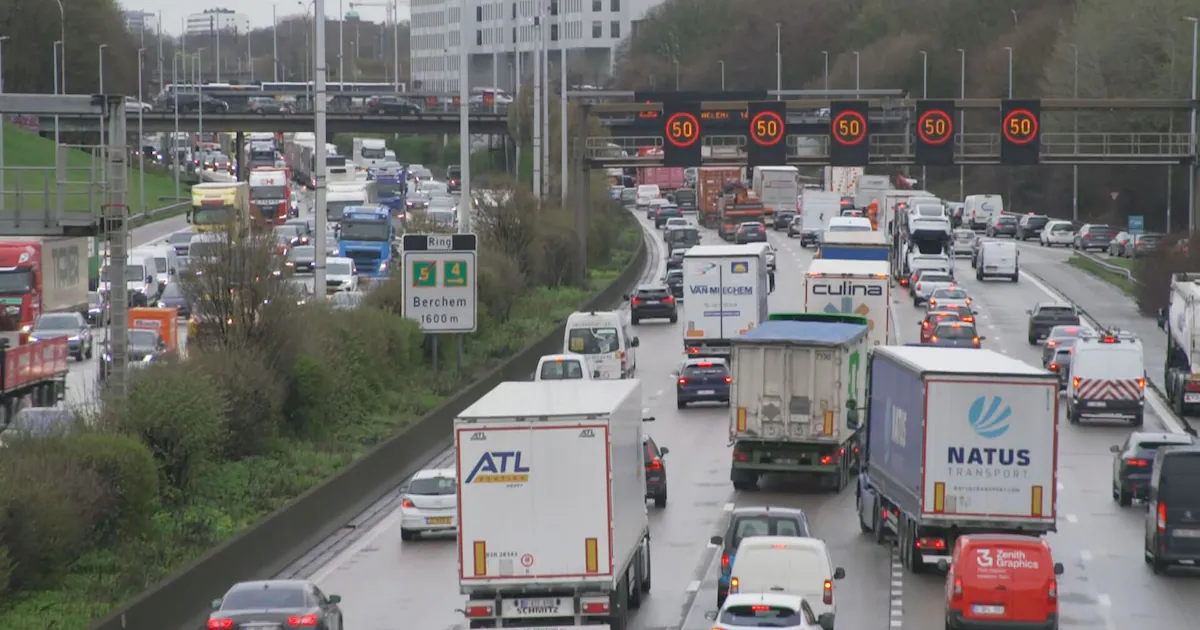
- Costs: road transport is getting more expensive through tolls, CO2 pricing and wages.
- Driver shortages: finding truck drivers is increasingly difficult across Europe.
- Congestion: around ports such as Antwerp and Rotterdam, road congestion makes delivery times less predictable.
- Reporting: under the CSRD, many companies must report the emissions of their logistics chain, which makes the choice of transport mode visible.
The business case for modal shift to inland waterways
Why inland waterways specifically? Because they combine three advantages that matter to shippers:
- Lower CO2 emissions: measurements by TNO for Topsector Logistiek put a large Rhine vessel at around 0.031 kg CO2 per tonne-kilometre, compared with around 0.105 kg for a truck over 20 tonnes with a trailer.
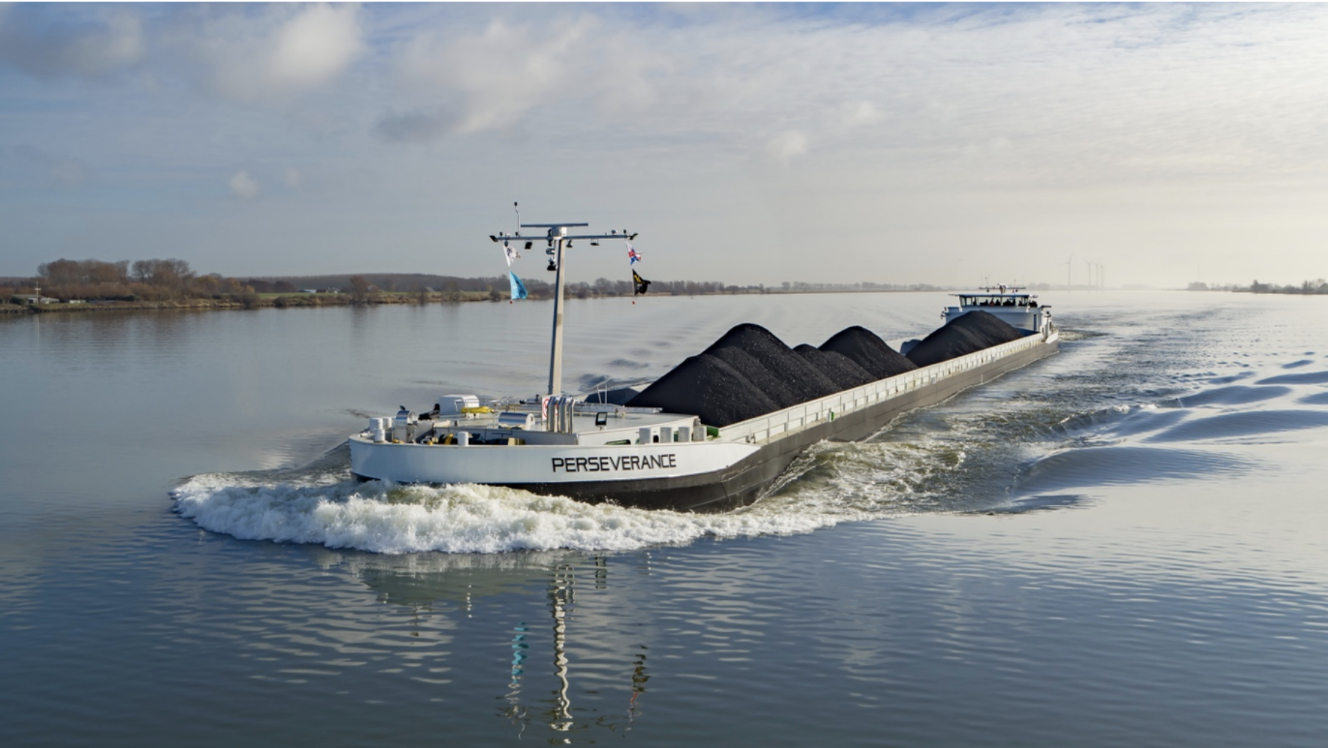
- Lower transport costs for large volumes: one vessel carries the load of dozens of trucks with one engine and a small crew. A 1,200-tonne vessel replaces around 50 trucks; the largest vessels around 220.
- Spare capacity and predictability: many waterways still have room for more traffic, and a vessel does not get stuck in congestion.
The full comparison of costs, emissions, capacity and speed is in our guide to inland shipping vs. road transport. In short: for large volumes over medium and long distances, the waterway usually wins on total logistics cost.
Barriers to modal shift, and how to overcome them
If the benefits are so clear, why does so much freight stay on the road? Because modal shift brings real practical hurdles. Each of them can be addressed.
| Barrier | What it means | How to overcome it |
|---|---|---|
| First and last mile | Your site is not on the water, so a truck still covers part of the route | Choose a terminal close to origin and destination; keep the road legs short |
| Transshipment | Loading and unloading at a terminal costs time and money | Use standard loading units such as containers, so only the unit is moved |
| Transit time | A vessel is slower than a truck | Plan with a buffer; use the waterway for flows with a predictable delivery window |
| Volume | A vessel only pays off with enough cargo | Bundle flows, work with regular departures or share capacity with other shippers |
| Low water | In dry summers, vessels on the Rhine can load less | Plan with smaller vessels or a buffer stock during low-water periods |
| Capacity and crew | More freight on the water needs more vessels and more boatmasters | Work with operators that can scale, including through remote operations |
That last barrier is easy to overlook, but it is fundamental. In its 2026 report, Union TLF identifies containerised road freight over more than 300 kilometres as one of the clearest opportunities for modal shift, but also warns that rail and inland waterways may not currently have enough capacity to absorb those volumes. Without enough vessels and crew, modal shift stalls, however good the business case.
How to plan a modal shift in six steps
A successful modal shift starts small and grows. These six steps help you move from idea to regular flows:
- Map your freight flows. List your main routes with volumes, frequency, distance, delivery window and type of goods. Flows with large, regular volumes over longer distances are the best candidates.
- Select the most promising corridors. Look for routes where origin and destination are close to a waterway or container terminal. Long-distance container flows and bulk goods usually score best.
- Check the infrastructure. Which terminals are nearby, what vessel sizes does the waterway allow, and how often do vessels depart? Talk to the terminal and the port.
- Talk to operators. Ask barge operators and logistics providers for a proposal covering the whole chain, including the road legs and transshipment, so you compare total logistics cost rather than freight rates alone.
- Start with a pilot. Move one flow for a few months. Measure transit time, reliability, cost and CO2, and involve your customers and planners.
- Measure and scale. Calculate your emissions per shipment in line with ISO 14083 or the GLEC Framework, report the result, and extend the shift to other flows.
How remote operations make modal shift scalable
Modal shift needs more inland shipping capacity, and that capacity runs into a hard limit: people. There are too few boatmasters, and a shortage of 1,500 to 2,000 boatmasters is expected by 2035. That pushes up costs: according to a Seafar reference calculation, crew costs already account for around 40 percent of the operating costs of a traditionally crewed vessel.
Remote operations helps to remove that bottleneck. A certified Remote Operator in a Remote Operation Center (ROC) takes over tasks from the crew on board, so vessels can keep sailing longer and, where the rules allow, with a smaller crew. In Flanders, this is already permitted today; for the Rhine, the Central Commission for the Navigation of the Rhine is working on the rules. Seafar has been operating inland vessels remotely since 2019, on Belgian, Dutch and German waterways and on the Rhine.
For shippers, that means more capacity on the water and a more stable cost base, two things a modal shift needs to last.
Curious what modal shift or remote operations could mean for your transport costs? Run the numbers with our business case calculator.
Frequently asked questions about modal shift
What is a modal shift?
A modal shift is the move of freight from one transport mode to another, usually from road to rail or inland waterways, to reduce costs, emissions and congestion.
What is the difference between intermodal and multimodal transport?
Multimodal transport uses at least two transport modes under one contract. Intermodal transport is a form of multimodal transport where the goods stay in the same loading unit, such as a container, throughout the journey.
What are the EU targets for modal shift?
The EU Sustainable and Smart Mobility Strategy aims for rail freight to grow by 50% by 2030 and double by 2050, and for inland waterway and short sea transport to grow by 25% by 2030 and by 50% by 2050.
How much CO2 can modal shift to inland waterways save?
A large Rhine vessel emits around 0.031 kg CO2 per tonne-kilometre, compared with around 0.105 kg for a heavy truck with trailer. That is roughly three times less, depending on sailing direction, load factor and vessel.
Which goods are suitable for modal shift to inland waterways?
Large, regular volumes with a predictable delivery window are the best fit, such as bulk goods, building materials, fuels, chemicals and containers.
Does modal shift work if my site is not on the water?
Yes. With intermodal transport, a truck covers the short stretch to and from the nearest terminal, and a vessel covers the long distance. The closer the terminal, the better the business case.
Sources for this modal shift guide
- Eurostat, Freight transport statistics: modal split (2025)
- Union TLF, European freight statistics report (July 2026), as reported by Railmarket
- European Commission, Sustainable and Smart Mobility Strategy, COM(2020) 789 final
- European Commission, NAIADES III: Inland Waterway Transport Action Plan 2021-2027
- TNO for Topsector Logistiek, Meten op schepen (2023, in Dutch)
- Rijkswaterstaat, 1 schip in plaats van 220 vrachtwagens (February 2025, in Dutch)
- Panteia: expected boatmaster shortage by 2035