Boatmaster jobs: working as a Remote Operator or on board?
Anyone looking at boatmaster jobs today will find two kinds of role: the classic job on board, and a new role ashore as a Remote Operator. In both cases you sail an inland vessel using your skills as a boatmaster. The difference lies in where you work, what your day looks like and how you combine work and private life. In this guide we put both options side by side.
- There are more boatmaster jobs than ever: by 2035, a shortage of 1,500 to 2,000 boatmasters is expected.
- On board, you live and work on the vessel, often in a rhythm of two weeks on, two weeks off.
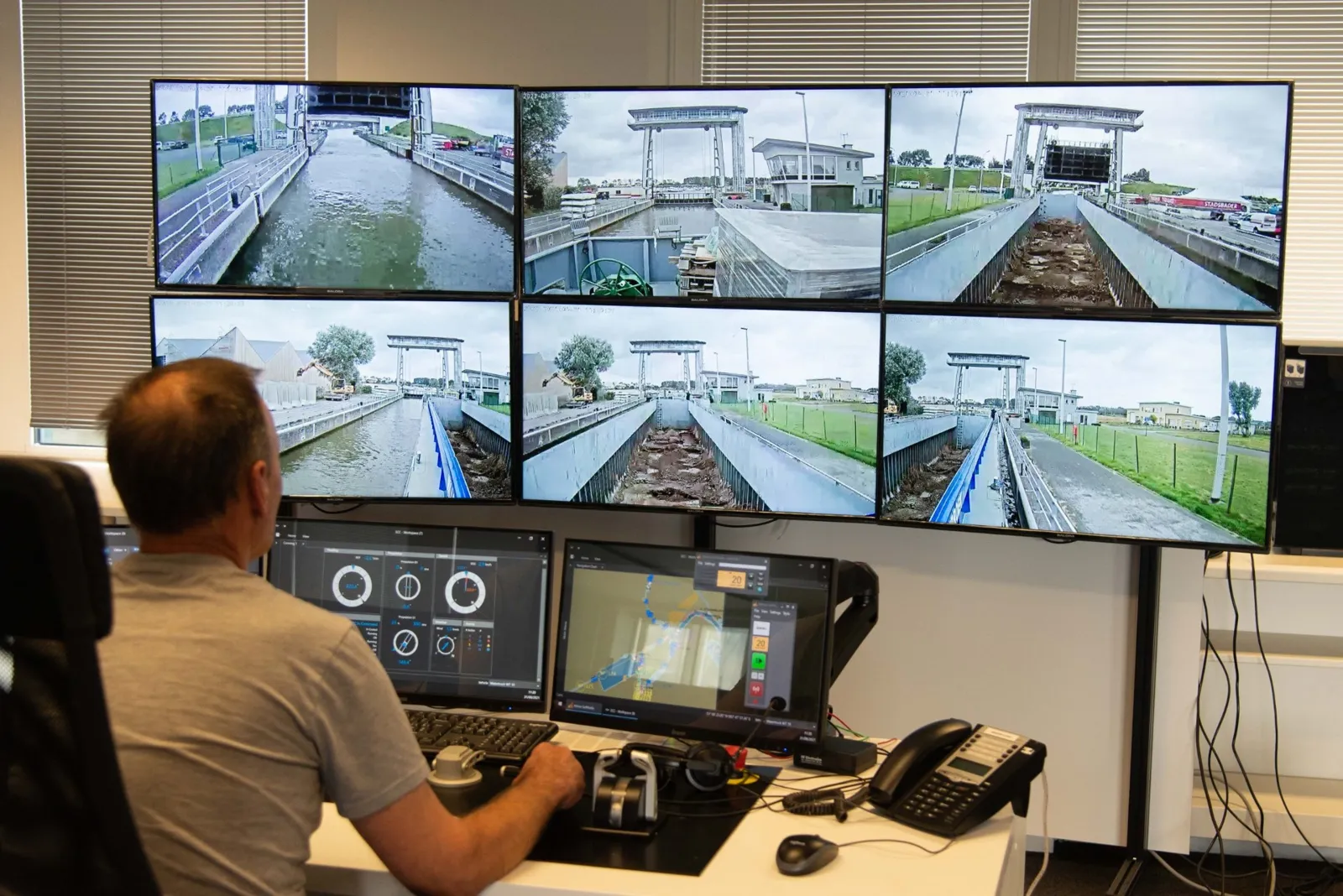
- As a Remote Operator, you sail vessels from a Remote Operation Center (ROC) ashore, in shifts, and sleep at home every night.
- Both jobs require the same foundation: a boatmaster's certificate and experience as a boatmaster.
Why there are so many boatmaster jobs open
Inland shipping needs boatmasters, and that will not change in the coming years. Many experienced boatmasters are retiring, while too few young people choose the profession. Research by Panteia expects a shortage of 1,500 to 2,000 boatmasters by 2035. At the same time, Europe wants to move more freight by water: inland waterway transport is set to grow by a quarter by 2030.
For you as a boatmaster, that means plenty of choice. Vessel owners compete for experienced people, and new ways of working have emerged. The most important of these is remote operation.
What does a boatmaster on board do?
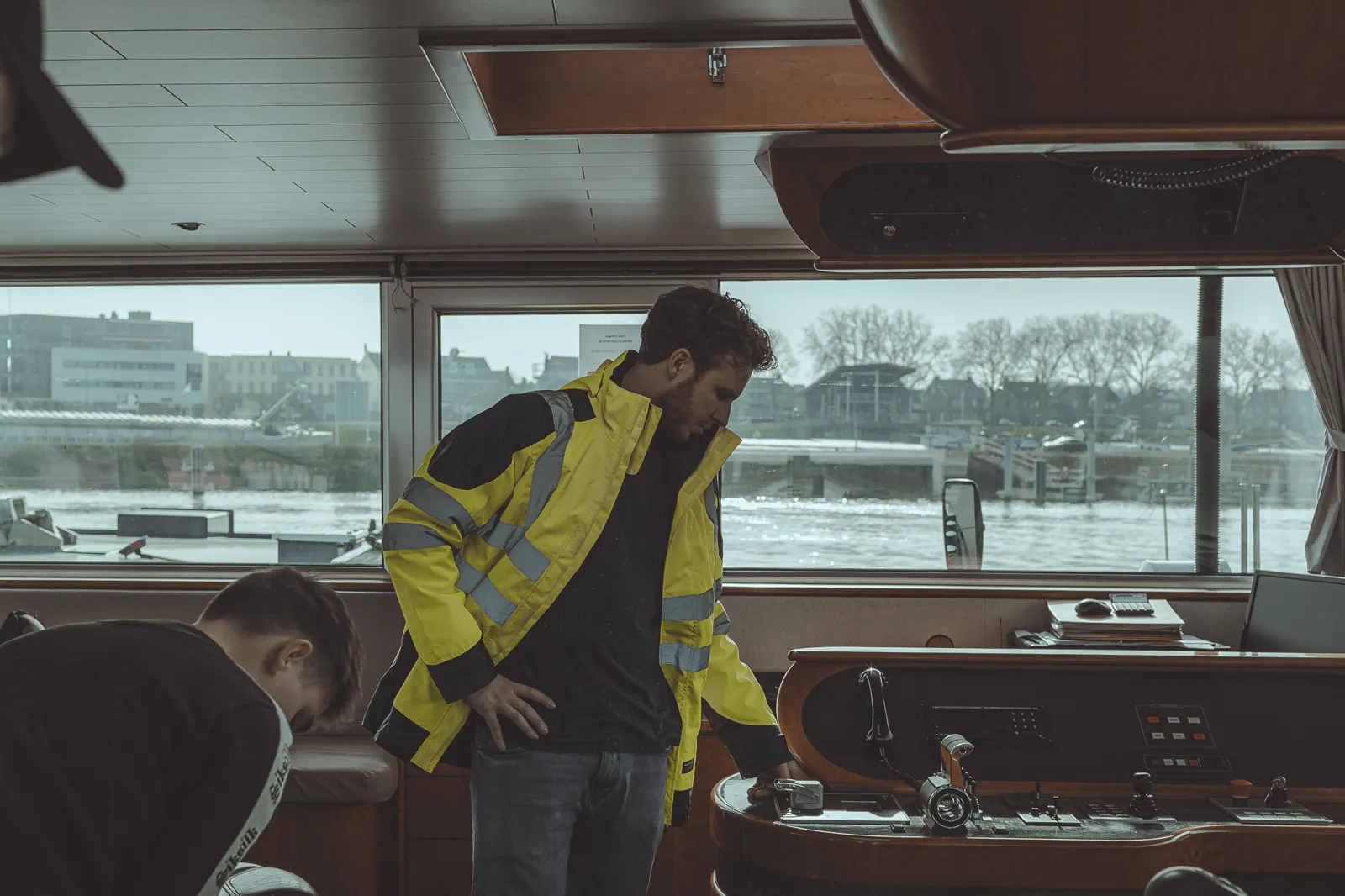
As a boatmaster on board, you are responsible for the vessel, the crew and the cargo. You sail, manoeuvre in ports and locks, plan the voyage and keep the vessel in good condition. On the Rhine, boatmasters often work two weeks at a stretch, followed by two weeks off.
Life on board has a lot to offer: freedom, variety and a strong bond with your vessel. But it also asks a lot of the people around you. Two weeks away means two weeks without your partner, children or friends, and part of your day is spent waiting: at locks, at the quay or during your rest time on board.
What does a Remote Operator do?
A Remote Operator is an experienced boatmaster who sails vessels from a Remote Operation Center (ROC) ashore. You sit at a workstation with large screens and sail the vessel as if you were standing in the wheelhouse yourself: with levers for propulsion, separate controls for steering, and cameras on board that give you a full 360-degree view. Over VHF radio, you stay in contact with other vessels, locks and traffic centres.
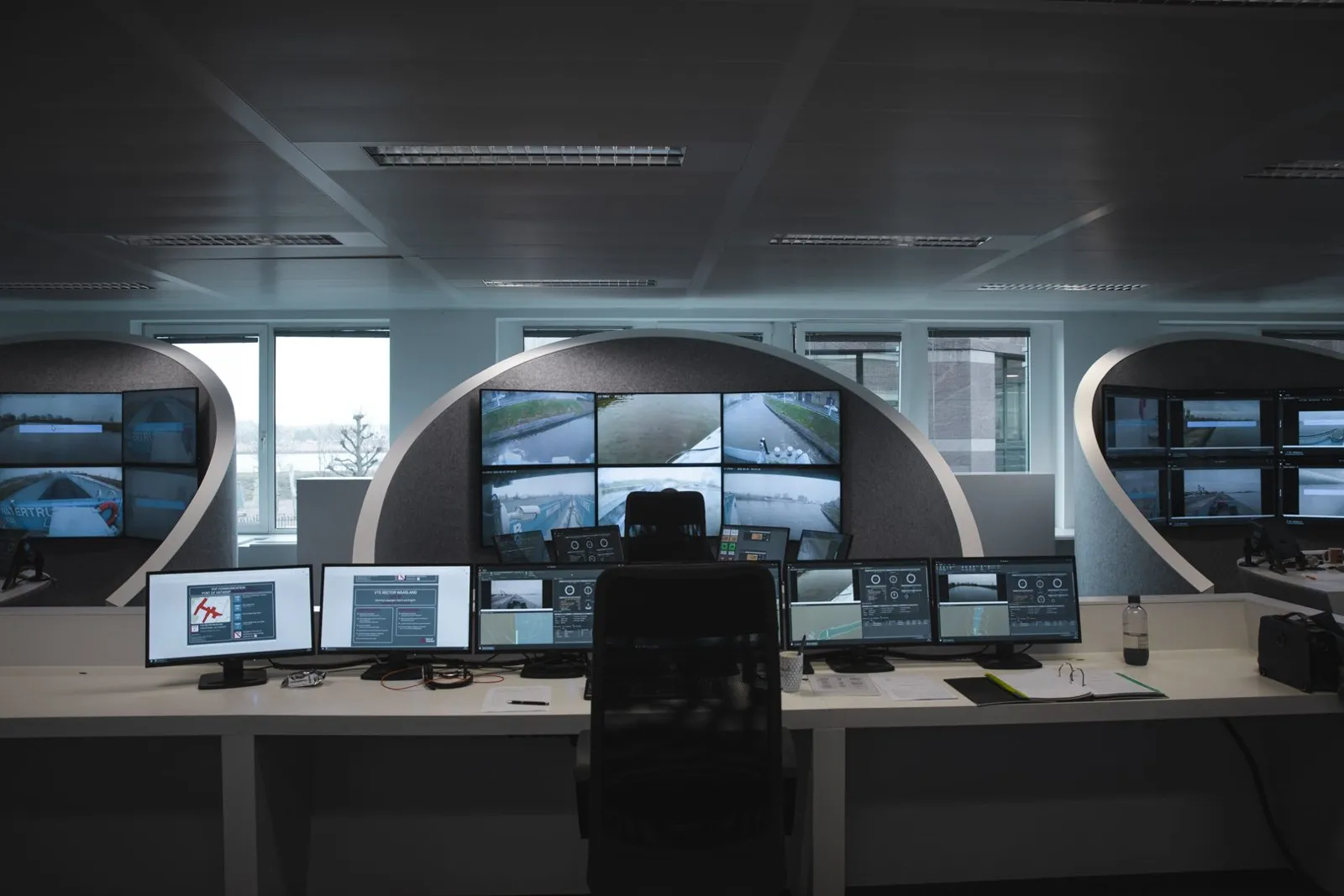
You always work together with the boatmaster on board, who can take over the vessel at any moment. The big difference: you can focus entirely on sailing. Where a boatmaster on board spends much of the day waiting, the productive share of a Remote Operator's working day is much higher, roughly 90 percent compared with 40 percent on board.
Seafar has Remote Operation Centers in Antwerp, Dordrecht and Duisburg, among other locations. The current vacancy is for the ROC at our head office in Antwerp. You work in 8-hour shifts, with flexible start times that fit your life, and you sleep at home every night.
Boatmaster on board vs. Remote Operator: the differences at a glance
| Boatmaster on board | Remote Operator at Seafar | |
|---|---|---|
| Workplace | Wheelhouse of one vessel | Workstation in the ROC in Antwerp |
| Rhythm | Often two weeks on, two weeks off | 8-hour shifts with flexible start times |
| Sleeping | On board | At home every night |
| Tasks | Sailing, manoeuvring, crew, cargo, maintenance | Sailing and manoeuvring together with the crew on board; giving feedback to the developers |
| Vessels | One fixed vessel | Different vessels from 38 to 110 metres |
| Productive time | Roughly 40% of the working day | Roughly 90% of the working day |
| Requirements | Boatmaster's certificate and experience | Groot Vaarbewijs, GMDSS radio certificate, radar licence and at least 5 years of experience on board |
| Employment | Employee or self-employed owner-operator | Employee, self-employed or flexi-job (a Belgian employment scheme) |
| Career path | Larger vessel, own vessel | In time, training other boatmasters to become Remote Operators |
Which qualifications do you need as a boatmaster or Remote Operator?
The foundation is the same as on board, with a few extras. For a job as a Remote Operator at Seafar you need a Groot Vaarbewijs (boatmaster's certificate), a GMDSS radio certificate and a radar licence, plus at least 5 years of experience on board, including 2 years as a boatmaster. A Rhine and/or Elbe licence is a plus. You are also comfortable with computers and speak Dutch or French and at least basic English; German is a bonus.
As a Remote Operator, you follow internal training in which you learn to work with the workstation, the camera feeds and the procedures for handing over control between shore and vessel. In time, you can train other boatmasters to become Remote Operators yourself. Experience with different vessels and waterways is a plus, because you sail vessels from 38 to 110 metres long.
Is working as a Remote Operator right for you as a boatmaster?
Working ashore is not for everyone, and it does not need to be. It suits boatmasters who:
- want to keep practising their profession, but be home with their family every day;
- are looking for a different rhythm after years on board, without leaving inland shipping;
- enjoy variety in vessels, waterways and manoeuvres;
- like working with new technology and helping shape how inland shipping will work tomorrow.
Conversely, the job on board remains the best choice if you love life on the water, the responsibility for your own vessel and the freedom that comes with it. Many boatmasters also combine both worlds over the course of their career.
Will boatmaster jobs on board disappear?
No. Remote operation does not replace the boatmaster; it moves part of the work ashore. A qualified boatmaster is always involved, on board or in the ROC. The rules are evolving, though: in Flanders, a vessel may sail with a smaller crew when a Remote Operator takes over tasks, and for the Rhine, the Central Commission for the Navigation of the Rhine is working on similar rules. You can read more about this in our whitepaper State of Regulation 2027.
For boatmasters, that mainly means new opportunities: the profession gains a career path that does not depend on being away from home for weeks at a time.
Boatmaster jobs at Seafar
Seafar has been operating inland vessels remotely since 2019, on Belgian, Dutch and German waterways and on the Rhine. Our Remote Operators are experienced boatmasters who apply their skills from one of our Remote Operation Centers.
Does this job sound like you? View the Schipper Binnenvaart vacancy and apply directly. You choose whether you work as an employee, self-employed or through a flexi-job. Please note: the vacancy page is in Dutch.
Frequently asked questions about boatmaster jobs and working as a Remote Operator
What is a Remote Operator in inland shipping?
A Remote Operator is an experienced boatmaster who sails an inland vessel from a Remote Operation Center ashore, using camera feeds, sensors and a workstation that works like the wheelhouse. They work together with the boatmaster on board.
Which qualifications do you need to become a Remote Operator?
At Seafar we ask for a Groot Vaarbewijs (boatmaster's certificate), a GMDSS radio certificate and a radar licence, plus at least 5 years of experience on board, including 2 years as a boatmaster.
Do Remote Operators work in shifts?
Yes. You work 8-hour shifts with flexible start times. After your shift, you go home.
Where do Remote Operators at Seafar work?
In the Remote Operation Center at Seafar's head office in Antwerp.
Does remote operation replace the boatmaster on board?
No. A qualified boatmaster is always involved. Remote operation divides the work differently between vessel and shore, so that vessels can also sail safely with a smaller crew where the rules allow it.
Why are there so many boatmaster jobs?
Many experienced boatmasters are retiring and too few new ones are joining. A shortage of 1,500 to 2,000 boatmasters is expected by 2035, while Europe wants to move more freight by water.