Living Lab Green & Autonomous Corridor: Testing Hydrogen and Remote Operation at Sea
Twelve partners use a four-year Living Lab aboard Samskip's hydrogen-powered SeaShuttle container ships to find out what zero-emission and remote operation mean for crews, Remote Operators and maritime education in the Rotterdam-Rijnmond region.
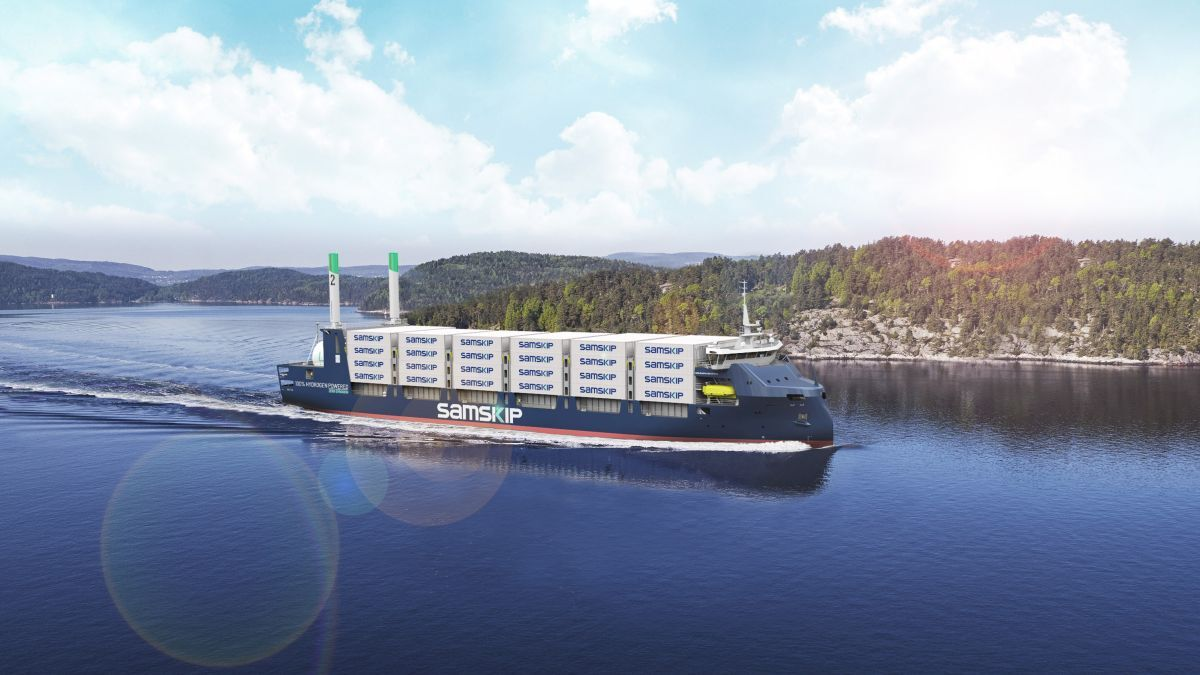
The Living Lab Green & Autonomous Corridor brings zero-emission shipping and remote operation together on one vessel type. Aboard Samskip's hydrogen-powered SeaShuttle container ships, which sail between Rotterdam and Oslo from 2027, twelve partners study what both changes mean for the people who work with them.
Project facts
- Programme
- Just Transition Fund (JTF) Rijnmond 2021-2027, Track 3: strengthen the resilience of the labour market for the transition
- Funding
- Co-funded by the European Union
- Duration
- 2026 to 31 December 2029
- Coordinator
- Hogeschool Rotterdam (Rotterdam University of Applied Sciences)
- Seafar's role
- Remote operation technology, the Remote Control Centre build at RDM and training for Remote Operators
- Cluster
- Smart Logistics and Maritime Innovation
- Status
- In progress
A Double Transition for Maritime Crews
The maritime sector is changing in two ways at once. Emission rules, among them the EU Emissions Trading System and the upcoming IMO net-zero regulation in 2027, push shipping companies towards zero-emission energy such as hydrogen, methanol and ammonia. At the same time, digitalisation makes it possible to monitor and partly operate ships remotely.
Both changes alter the tasks and skills of crews on board, Remote Operators ashore and port personnel, while the sector is short of seafarers. The project asks which tasks and skills new energy systems require, how maintenance should be organised, and how crews, autonomous systems and Remote Operators will work together.
A Living Lab on the Rotterdam-Oslo Corridor
Samskip is building two hydrogen-powered SeaShuttle container ships. According to the project description they are the first containerships in European short sea shipping to sail on hydrogen, and they are technically prepared for autonomous operation. From 2027 they sail between Rotterdam and Oslo.
The Living Lab combines the vessels' energy management, situational awareness and an onboard data and communication platform with a Remote Control Centre (RCC) on the RDM Campus of Rotterdam University of Applied Sciences. The RCC is used for education and for experiments.
Remote and autonomous systems at sea have so far mostly been tested in controlled demonstrations with short trial periods. In this Living Lab, remote monitoring and operation of energy and navigation systems are tested all year round, and the project collects three years of operational data from some of the most advanced vessels in Europe.
Four Objectives
- Practical insight into the division of tasks and the skills needed by professionals on zero-emission and autonomous vessels, covering energy management, maintenance and navigation.
- A Human Capital Roadmap for the Rotterdam-Rijnmond region that quantifies future workforce and training needs.
- Education and training programmes for maritime officers (MBO and HBO) and maritime professionals, tailored to remote operation and new energy systems.
- The Living Lab itself, as an open innovation platform where industry, education and research experiment with zero-emission and remote operations.
Seafar's Role
Seafar contributes in three areas.
Seafar contributes the situational awareness system together with CaptainAI, supports ship-to-shore connectivity and calibrates its remote operation software in the Living Lab. It also takes part in the experiments on monitoring effectiveness and on handovers between system, crew and Remote Operators.
Seafar coordinates the build of the Remote Control Centre at the RDM Innovation Dock, used for training simulation and for a live connection to the SeaShuttles.
Seafar develops and tests the first training programme for professional remote vessel operators, tested with 20 professionals, and contributes to training modules for MBO and HBO students.
The Consortium
| Partner | Role |
|---|---|
| Hogeschool Rotterdam, coordinator | Project management, human capital research and development of education modules. |
| MARIN | Maritime research, analysis of nautical complexity and handover experiments. |
| TU Delft | Scientific research, data platform and data storage infrastructure. |
| Samskip (Nav-Tech B.V.) | Owner and operator of the SeaShuttles and the physical Living Lab platform, with energy management and vessel operations expertise. |
| Zeabuz | Autonomous navigation systems and software for the RCC. |
| Seafar | Remote operation technology, situational awareness, the RCC build at RDM and training for Remote Operators. |
| ABB Marine & Ports | Energy management systems and pilot control automation. |
| CaptainAI | Situational awareness software and data analytics. |
| TechBinder | Onboard data and communication platform and system integration. |
| Smart-Ship | Smart shipping solutions and support for RCC training. |
| STC Group | MBO maritime education and training modules on energy management and remote operation. |
| Gemeente Rotterdam | Public partner for the regional labour market and societal integration. |
The project also works with other human capital programmes, such as GroenvermogenNL, NGF People, JTF Port of Energy and the Maritime Master Plan, to embed its results in the wider human capital agenda of the Rijnmond region.
Six Work Packages
- 01Project Management
Overall execution, reporting to the funder and governance, including quarterly consortium meetings and a steering committee twice a year.
- 02Communication and Dissemination
A project website, regular news updates, Living Lab events such as workshops and visits, and presence at external events and conferences.
- 03Living Lab
Building and operating the Living Lab infrastructure on the SeaShuttles and at the RCC: system architecture, sensors and onboard network, situational awareness, ship-to-shore connectivity, data logging and integration.
- 04Human Factor Experiments
Experiments on the SeaShuttles and in the RCC on how crews and Remote Operators use the systems effectively and safely, including monitoring, handovers and task allocation.
- 05Human Capital Impact and Outlook
Translating Living Lab insights into future job profiles and a Human Capital Roadmap for the Rijnmond region.
- 06Education and Training
Education modules for maritime officers and professionals on zero-emission and remote operation, and the Remote Control Centre at the RDM Innovation Dock.
Education and Training
The project develops education modules for MBO and HBO in maritime and inland shipping. MBO inland shipping students learn to operate an inland vessel remotely, and Maritime Officer students work with the energy management challenges of zero-emission energy carriers, mainly hydrogen.

The Living Lab also offers research assignments to students in economic, technological, logistics and maritime programmes at HBO and Master's level, from Rotterdam University of Applied Sciences and from other institutions in the region.
Where the Project Stands
The project runs until 31 December 2029. The SeaShuttles are expected to enter service in early 2027, when operational data collection in the Living Lab begins. We add updates, events and results to this page as the project progresses.
Traditional, Remote-Controlled and Autonomous Vessels
There are three ways to operate an inland vessel. This guide sets out how each works, where each stands today and how they connect on a single roadmap.
Read the guideSyncControl
Verifiable and fail-safe remote steering, developed with Smart-Ship under Interreg.
Read the projectFunding
The Living Lab Green & Autonomous Corridor is co-funded by the European Union through the Just Transition Fund (JTF Rijnmond 2021-2027).