One Week, Two Rooms: Antwerp Asks How, Charleroi Asks What Next
Remote navigation on show at the Autonomous Summit in Antwerp, and four years of NavAuWall closing in Charleroi. Both weeks point at the same gap.
In the space of three days this week, the sector asked two different questions about remote operations. In Antwerp, at the second Autonomous Summit during Port of the Future Week, the question was how the technology gets deployed at scale. In Charleroi, at the closing event of the Walloon research project NavAuWall, the question was what four years of research have made possible. We were in both rooms, and the two questions turn out to have the same answer.
- Port of the Future Week ran from 15 to 17 September 2026, with the Autonomous Summit at Port of Antwerp-Bruges on 16 September and the closing MAGPIE and PIONEERS conference in Rotterdam on 17 September.
- Around 30 technology demonstrators took part in Antwerp. WorldCargo News named Seafar's remote navigation technology among them.
- NavAuWall, the Walloon research project we coordinated, held its closing event at A6K in Charleroi on 17 September and runs to the end of the month.
- Four outlets covered the week: WorldCargo News, Flows, ATV and Radio 1.
- The recurring theme in the coverage: the technology is moving from trials into deployment, and the regulatory framework is the part that has not kept pace.
Antwerp: Remote Operated Vessels Move From Demonstration to Deployment
The Autonomous Summit at Port of Antwerp-Bruges brought roughly 30 technology demonstrators in front of policymakers and port companies. Remotely operated inland vessels stood alongside remotely operated rail, yard robots, drones for terminal equipment inspection and freight vehicles running on public roads. WorldCargo News, reporting on the week as a whole, listed Seafar's remote navigation technology among the technologies presented.
What made the day worth attending was not the hardware. It was the framing. The organisers positioned this edition as the step past the pilot project, and the speakers followed. Rob Smeets, chief executive of Port of Antwerp-Bruges, put the driver plainly.
It is becoming ever harder to find truck drivers or boatmasters. This technology can solve that.
That is the same diagnosis the inland shipping sector has been making for two years, now said out loud by the port authority. Smeets added that the point of the day was to show that the future has already started. The federal mobility minister, Jean-Luc Crucke, set the condition: the opportunity is real, and the roll-out has to happen safely, responsibly and within a sound legal framework. At the Rotterdam end of the week, Bo Cerup-Simonsen of the Maersk Mc-Kinney Moller Center for Zero Carbon Shipping reduced the scaling problem to four words: standardisation is the name of the game.
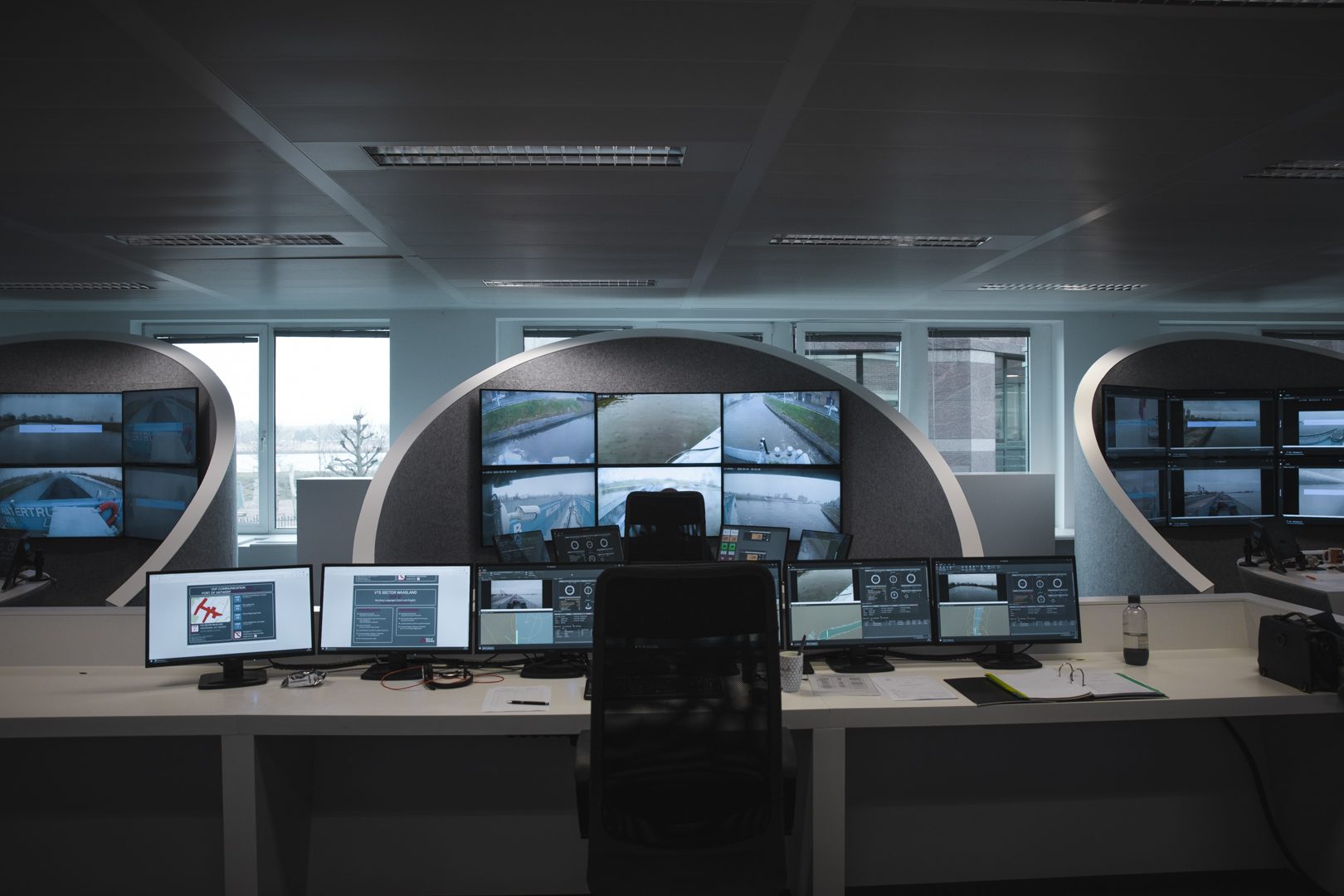
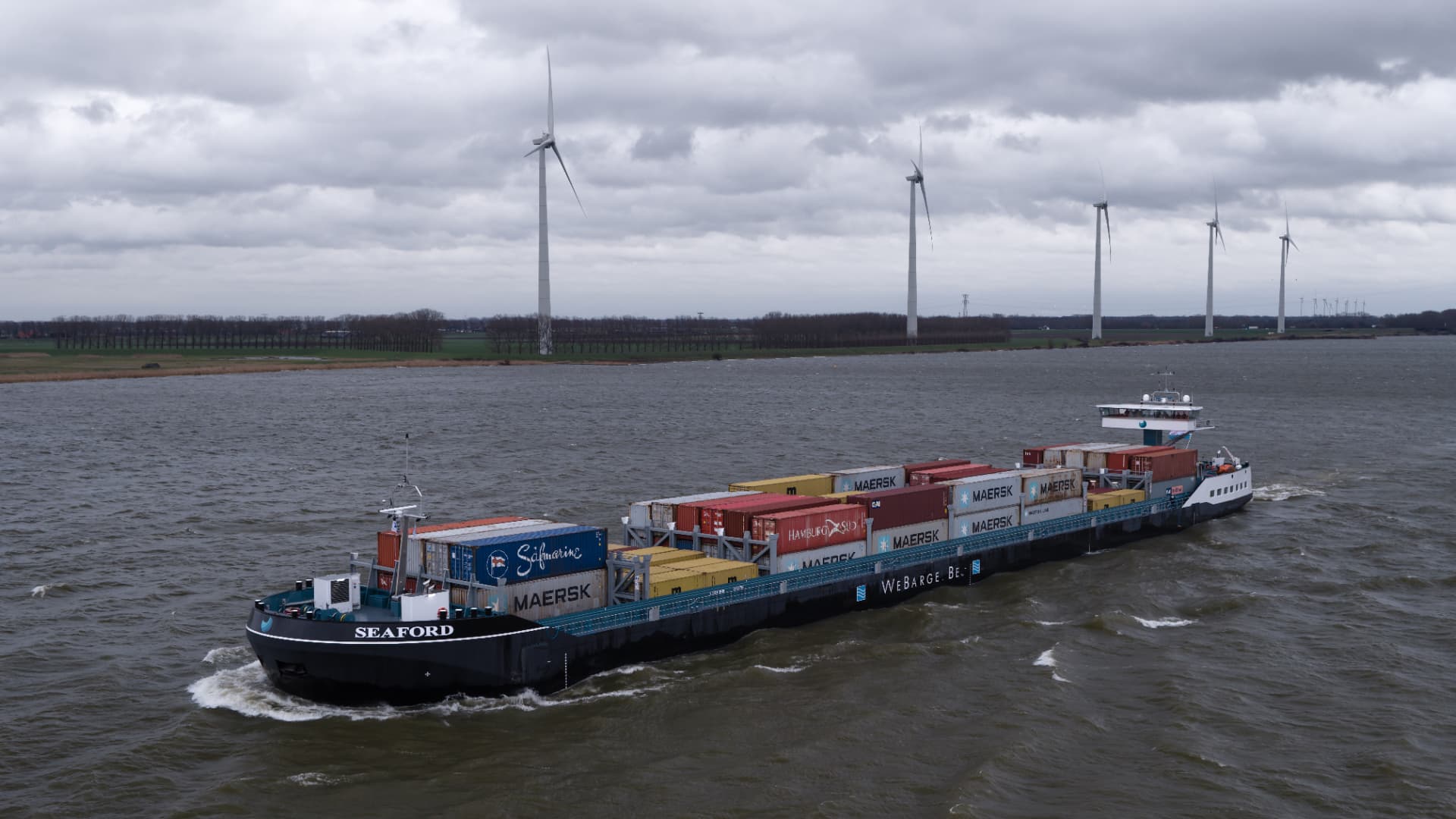
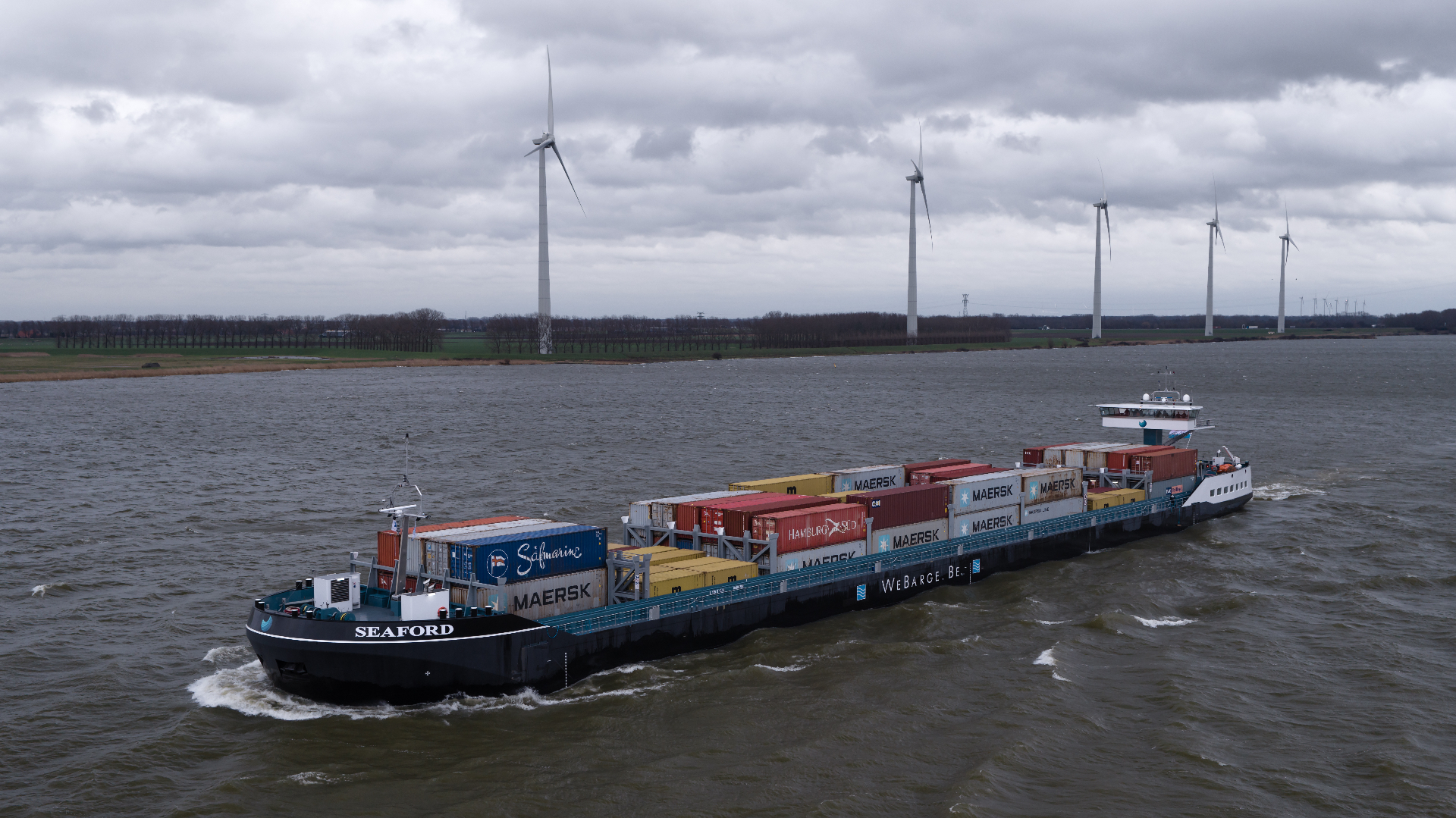
VRT NWS caught the detail that makes the abstraction concrete. Its report described a vessel sailing in the port of Antwerp while being controlled from Liege. That is the whole proposition in one sentence: the vessel is here, the qualified person is there, and the distance between them is a network connection rather than a compromise.
What the Maritime Digitalization Coverage Picked Up
| Outlet | What they covered |
|---|---|
| WorldCargo News | The week as a whole, under the line that Port of the Future Week shifts focus from pilots to deployment. Names Seafar's remote navigation technology among some 30 demonstrators. |
| Flows | The Antwerp summit, under a headline that sums up the sector's position better than we could: technology forging ahead, policy lagging behind. Behind Flows' paywall. |
| ATV | A television report from the port on 16 September, showing the remotely operated vessels, trains and freight vehicles to a general Antwerp audience. |
| Radio 1 | Weetikveel devoted a 39-minute episode, Haven van de toekomst, to the same question, with Kobe Ilsen in conversation with Maarten Weyn on autonomy, employment, climate and defence. |
Worth noting what that spread means. WorldCargo News and Flows reach the people who buy and regulate this technology. ATV and Radio 1 reach the people whose sons and daughters might consider the job. The crew shortage is partly a visibility problem, and a television report from the quayside does something for that which a trade article cannot.
The next morning, at A6K in Charleroi, the NavAuWall consortium presented the results of four years of work. We coordinated the project; ULiege's ANAST research unit, Multitel, Versus and DN&T were the partners, with support from Logistics in Wallonia and the SPW, under the Walloon Plan Marshall. The project began in October 2022 and runs to the end of September 2026.
The objective was specific, and deliberately not maximalist. NavAuWall set out to get from one Remote Operator per vessel towards one Remote Operator supervising three to six vessels at once, on Walloon canals, with a deckhand remaining onboard. Full removal of the crew was never the target. Two technical problems stood in the way, and both are recognisable from the MARIN risk assessment published last December: reliable detection and avoidance of objects in narrow canal navigation, and a connection that stays up in the places where it matters. Our own contribution was on the second: a communication module on the vessel that combines private 4G and LTE networks with 5G-URLLC, so that the link to the Remote Operation Centre holds along the whole route rather than along most of it.
Charleroi also mattered for a less technical reason. Remote operations in Belgium have been reported largely as a Flemish story, because that is where the first permits and the first Remote Operation Centre were. Wallonia has its own waterway network, its own modal shift ambition in construction materials and waste, and now four years of its own research record. The closing event was the moment that became visible.
Put the two days next to each other and the conclusion writes itself. In Antwerp, a port authority, a federal minister and thirty technology providers agreed that the technology is ready to leave the pilot phase, and that the framework around it decides how fast that happens. In Charleroi, a research consortium closed a project that proved a specific capability, and handed the question of what to do with it to the same framework.
That is the same message six inland fleets delivered in February, and the same one KPMG put to the Dutch ministry in December. Four outlets in one week, two regions, one gap. The technology is not what is holding this up.
Six Fleets, 500 Vessels: Make Haste With Remote Sailing Rules
Why six inland operators are asking for a framework rather than for permission, and what Panteia calculated it would be worth.
Read the articleSources
- 'Port of the Future Week shifts focus from pilots to deployment', WorldCargo News, September 2026.
- Julie Desmet, 'Autonomous Summit: Autonome technologie vooruit, beleid hinkt achterop', Flows, 16 September 2026.
- 'Hoe ziet de haven van de toekomst eruit? Vandaag kreeg u een voorproefje te zien', ATV, 16 September 2026.
- 'Haven van de toekomst', Weetikveel, Radio 1, 16 September 2026, 39 minutes. Presenter Kobe Ilsen, guest Maarten Weyn.
- 'Van zelfrijdende vrachtwagens tot vanop afstand bestuurde treinen: Antwerpse haven toont dat de toekomst al begonnen is', VRT NWS, 16 September 2026.
- NavAuWall project, coordinated by Seafar with ULiege-ANAST, Multitel, Versus and DN&T, October 2022 to September 2026, under the Walloon Plan Marshall.
Original article
Read the full article on WorldCargo NewsQuestions readers ask
What was Port of the Future Week?
A three-day programme from 15 to 17 September 2026, combining the second Autonomous Summit at Port of Antwerp-Bruges on 16 September with the closing MAGPIE and PIONEERS conference in Rotterdam on 17 September. Around 30 technology demonstrators took part in Antwerp.
What did Seafar show in Antwerp?
Remote navigation of inland vessels from a shore-based Remote Operation Centre. WorldCargo News listed Seafar's remote navigation technology among the technologies presented; VRT NWS reported on a vessel sailing in the port of Antwerp while being controlled from Liege.
What was NavAuWall?
A Walloon research project coordinated by Seafar, with ULiege-ANAST, Multitel, Versus and DN&T as partners, supported by Logistics in Wallonia and the SPW under the Plan Marshall. It ran from October 2022 to September 2026 and held its closing event at A6K in Charleroi on 17 September 2026.
What did NavAuWall set out to prove?
That one Remote Operator can supervise three to six vessels at once on Walloon canals, with a deckhand remaining onboard. The two technical problems it worked on were detection and avoidance of objects in narrow canal navigation, and a connection that stays up along the entire route.
Who covered the week?
WorldCargo News and Flows for the trade audience, ATV with a television report from the port and Radio 1 with a 39-minute Weetikveel episode for a general audience. VRT NWS also reported from the summit.