Flanders, the Netherlands and North Rhine-Westphalia back remote inland shipping in joint declaration
Three governments give remote and automated inland shipping a dedicated place in their joint agenda for the Antwerp-Rotterdam-Rhine-Ruhr corridor, with cross-border rules and wider deployment in focus.
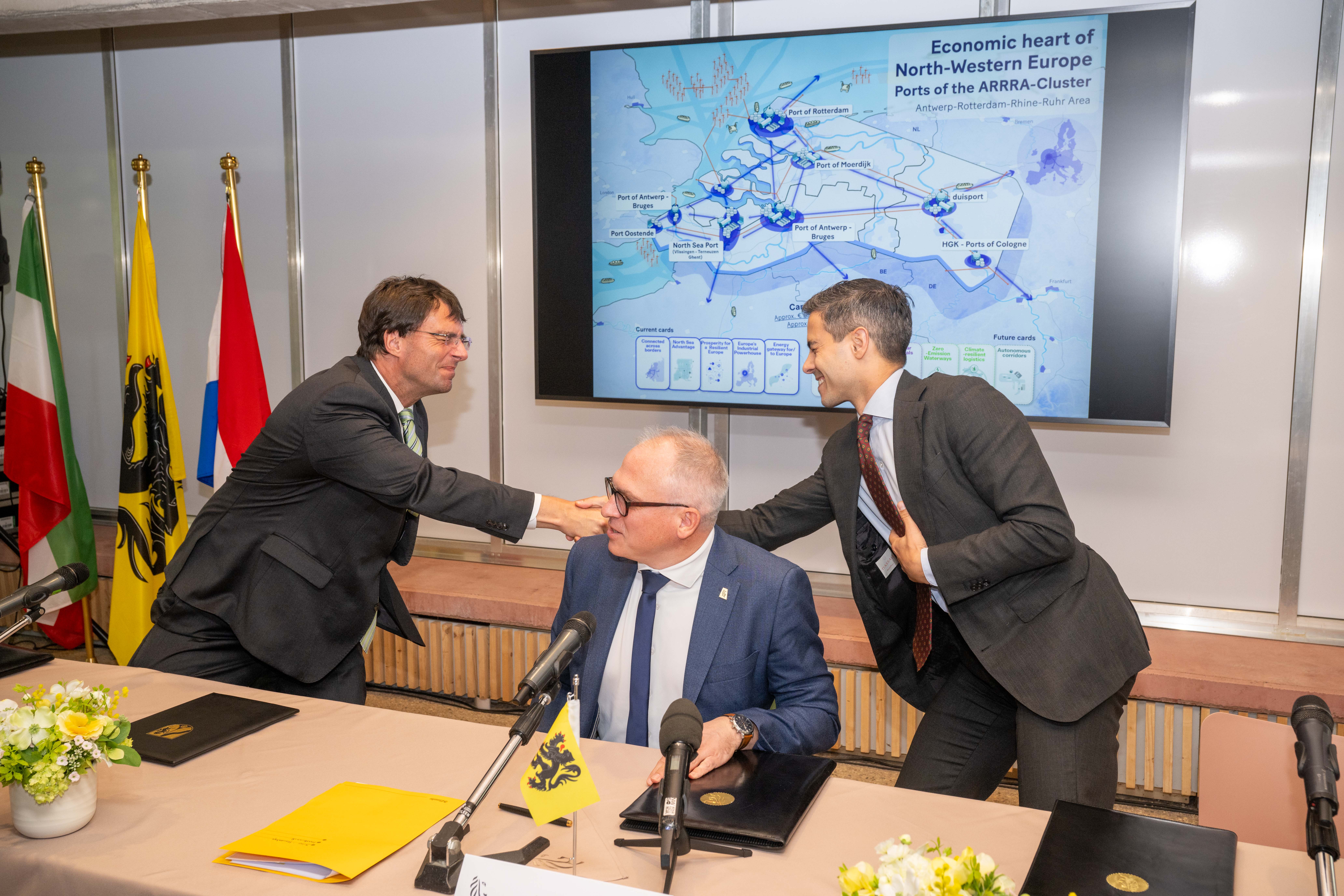
On 5 October, the governments of Flanders, the Netherlands and North Rhine-Westphalia signed a joint declaration at the Port Summit in Meise, committing to deepen cooperation across the Antwerp-Rotterdam-Rhine-Ruhr (ARRRA) port and industrial cluster. For the first time, remote and automated inland shipping gets a dedicated place in that agreement.
Major ports from the region's ARRRA cluster, including Port of Antwerp-Bruges, Port of Rotterdam, North Sea Port, Duisport, Port of Cologne/HGK, Port of Moerdijk and Port of Oostende, took part in the summit.
A cluster worth fighting for
The Antwerp-Rotterdam-Rhine-Ruhr cluster is one of Europe's heaviest concentrations of ports and industry, generating roughly €65 billion in added value and supporting close to 600,000 jobs. High energy prices, international competition, slow permitting and regulatory fragmentation have been chipping away at that position, which is why the three governments used the summit to set out four shared priorities: stronger circular value chains, faster cross-border energy infrastructure for CO2 and hydrogen, more resilient inland navigation in the face of climate change, and more innovative logistics through automated freight transport on both road and water, alongside drones.
NRW Minister Marcus Optendrenk tied that ambition directly to automation, noting that it "will only become a competitive advantage if we set the rules together."
A dedicated chapter for the waterways
The declaration states that automated and remotely operated inland shipping can make the sector safer, more sustainable and more competitive. It points to pilot projects that have been running since 2019, including on the international Rhine since 2023, as evidence that safe, reliable daily operations are achievable, and it commits the three governments to working toward wider use on international waterways.
On the regulatory side, the declaration backs continued work on a harmonised framework within the Central Commission for the Navigation of the Rhine (CCNR), so that Rhine rules can serve as a model for other international waterways. The three governments also intend to explore joint research projects under EU funding programmes.
The ambition goes beyond the Rhine corridor itself. The declaration points to extending the same technical progress to other vessel-operational tasks, both on board and ashore, and to traffic management that covers conventionally crewed and remotely operated vessels alike, while also supporting the sector in identifying new business models. As a reference point, it notes that a Benelux passport for cross-border automated road vehicles is due in early 2027, a precedent the three governments see as relevant for inland shipping too.
Looking beyond the water
Remote shipping sits inside a wider set of commitments. In its introduction, the declaration calls on the European Commission to support cross-border innovation and to make room for cross-border test environments and pilot projects across the ARRRA region, while the three governments pledge to avoid gold-plating and to interpret regulation jointly rather than separately. On decarbonisation, they commit to backing port proposals for funding under CEF3, the European Competitiveness Fund and Horizon Europe.
The declaration does not end with a signature. The three governments agreed to follow up on these commitments through existing consultation structures and at future government meetings, keeping the agenda alive rather than filing it away.
Why this matters for Seafar
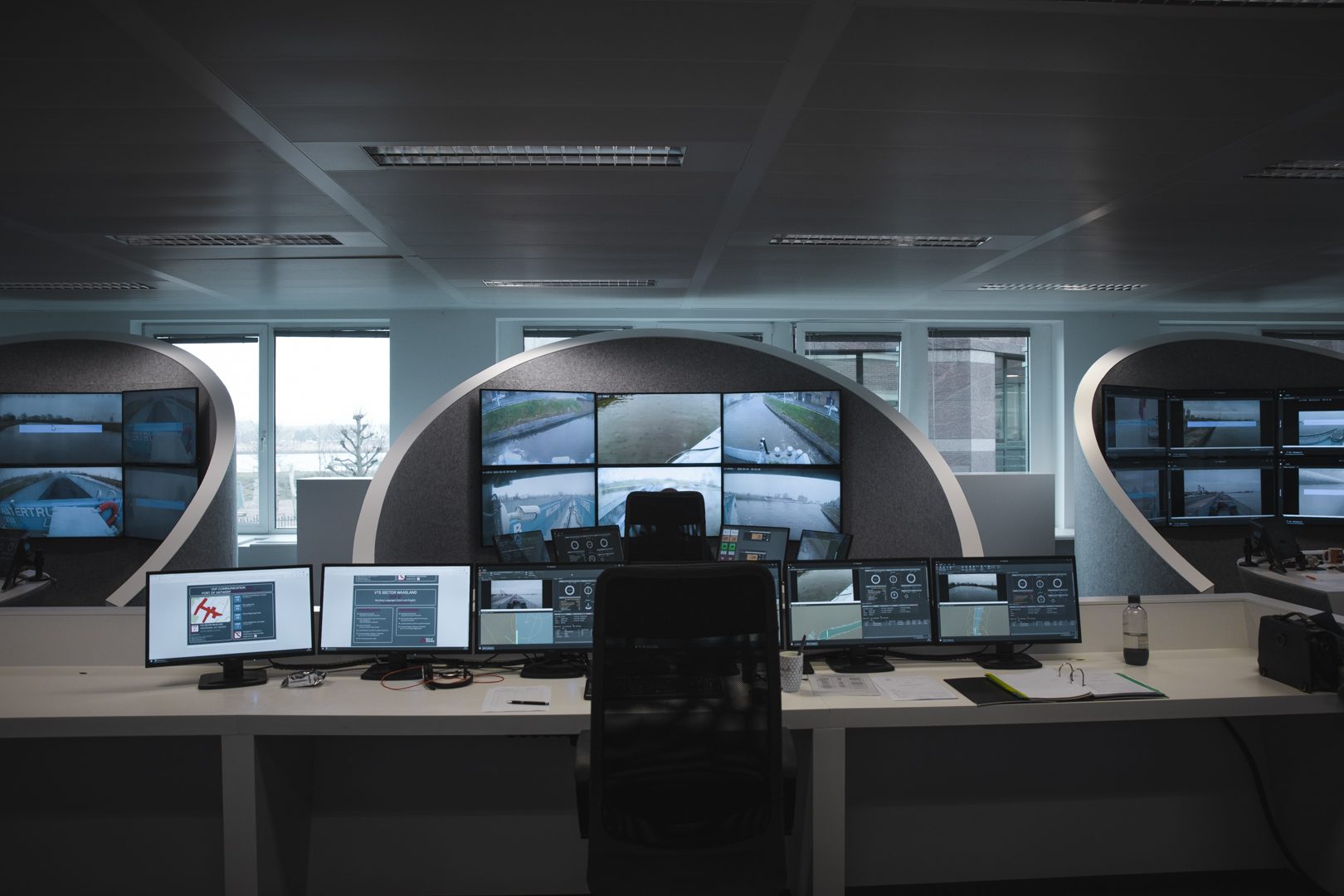
Seafar has operated remote inland vessels since 2019, including on the international Rhine since 2023. In practice, that means Remote Operators working from Seafar's Remote Operation Centers (ROCs) take over specific sailing tasks from the boatmaster on board, under a shift model built around certification, oversight and fallback procedures rather than removing people from the loop. The declaration does not name any single operator, but its backing for remote-operated shipping, signed by three governments that together cover the Antwerp-Rotterdam-Rhine-Ruhr corridor, lines up directly with that approach.
Political support at this level marks a shift. Remote inland shipping moves from a set of pilot projects to something national governments are actively building regulatory and funding support around for cross-border use, with the CCNR named as the forum where that framework will take shape and the Rhine positioned as the model for other international waterways. For Seafar, that is a welcome recognition of an approach we have been refining from day one, and we look forward to continuing to work with partners across the sector, including within the CCNR, as that framework develops.