Seafar Welcomes NRW Transport Minister for a First-Hand Look at Remote Vessel Operations
On 17 July 2026, Oliver Krischer, Minister for Environment, Nature Conservation and Transport of North Rhine-Westphalia, visited Seafar's Remote Operations Center during a port tour hosted by Port of Antwerp-Bruges.
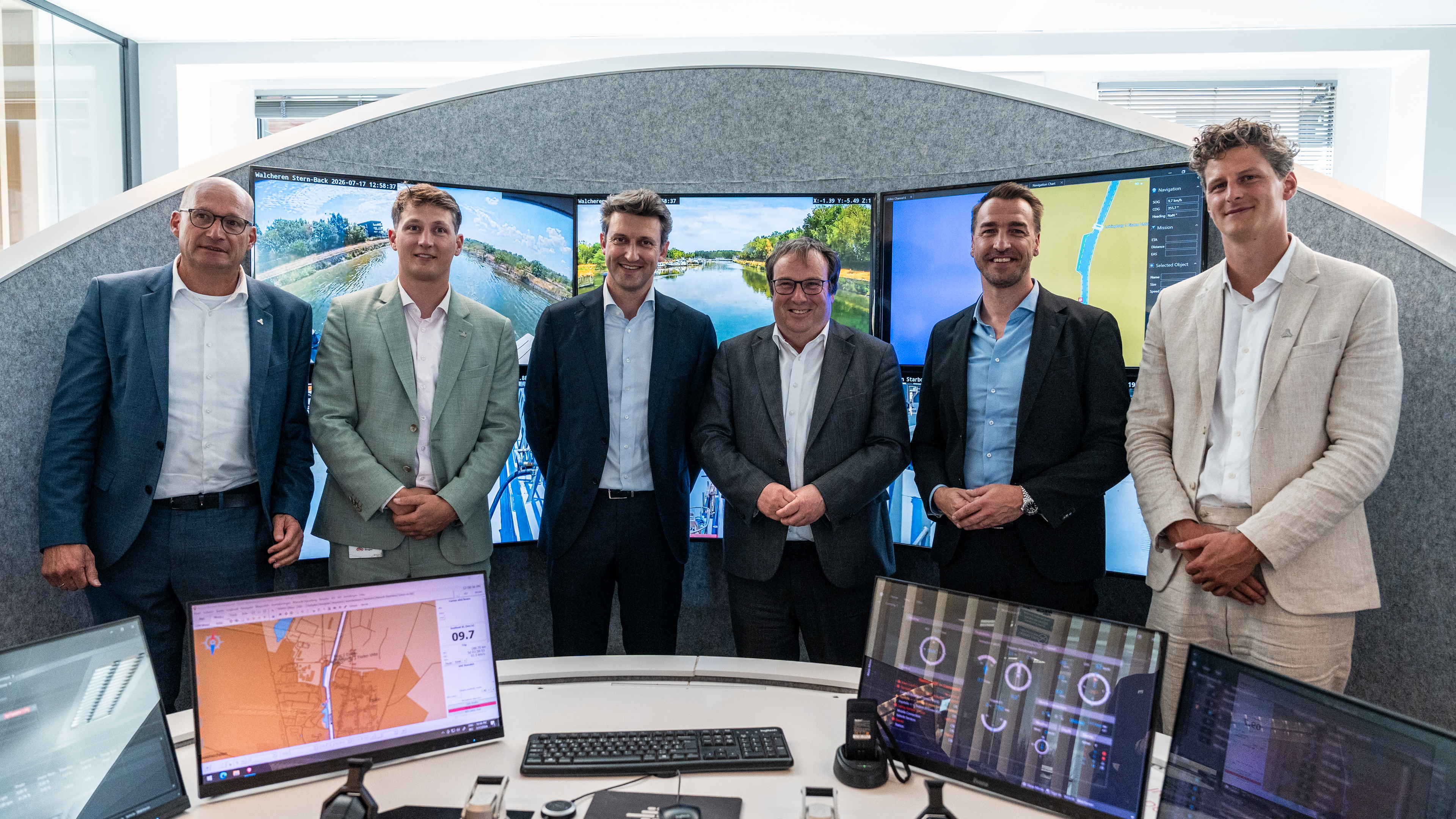
On 17 July 2026, we welcomed Oliver Krischer, Minister for Environment, Nature Conservation and Transport of North Rhine-Westphalia, to see remote vessel operations at work: a Remote Operations Center where vessels are navigated from shore by trained Remote Operators. The visit was part of a tour of the port hosted by Port of Antwerp-Bruges, and we were proud to be one of the stops on the programme.
The visit was organised by Port of Antwerp-Bruges as part of its engagement with North Rhine-Westphalia, one of the most important inland-shipping regions in Europe and a key partner for the port along the Rhine corridor.
Why this visit matters
North Rhine-Westphalia sits at the heart of the Rhine corridor, the busiest inland waterway in Europe. The Rhine carries around 285 million tonnes of freight a year, and on the corridor between Rotterdam and the German-Swiss border inland waterway transport holds roughly 40 percent of freight by tonne-kilometres, ahead of both road and rail. Keeping that corridor moving is a shared priority for the region and for Seafar.
The Rhine carries around 285 million tonnes of freight a year. On the Rotterdam to German-Swiss corridor, inland waterway transport holds about 40% of freight by tonne-kilometres, ahead of road at 38% and rail at 22%.
Port of Antwerp-Bruges plays a central role in that corridor as the maritime gateway linking the North Sea to the industrial heart of NRW. The minister has publicly supported closer cross-border cooperation on the Rhine and the digitalisation of the transport chain. That focus lines up directly with Seafar's work: connecting inland vessels to shore-based Remote Operations Centers, reducing dependency on scarce onboard crew, and building the operational and regulatory foundation for a more digital waterway.
What the minister saw
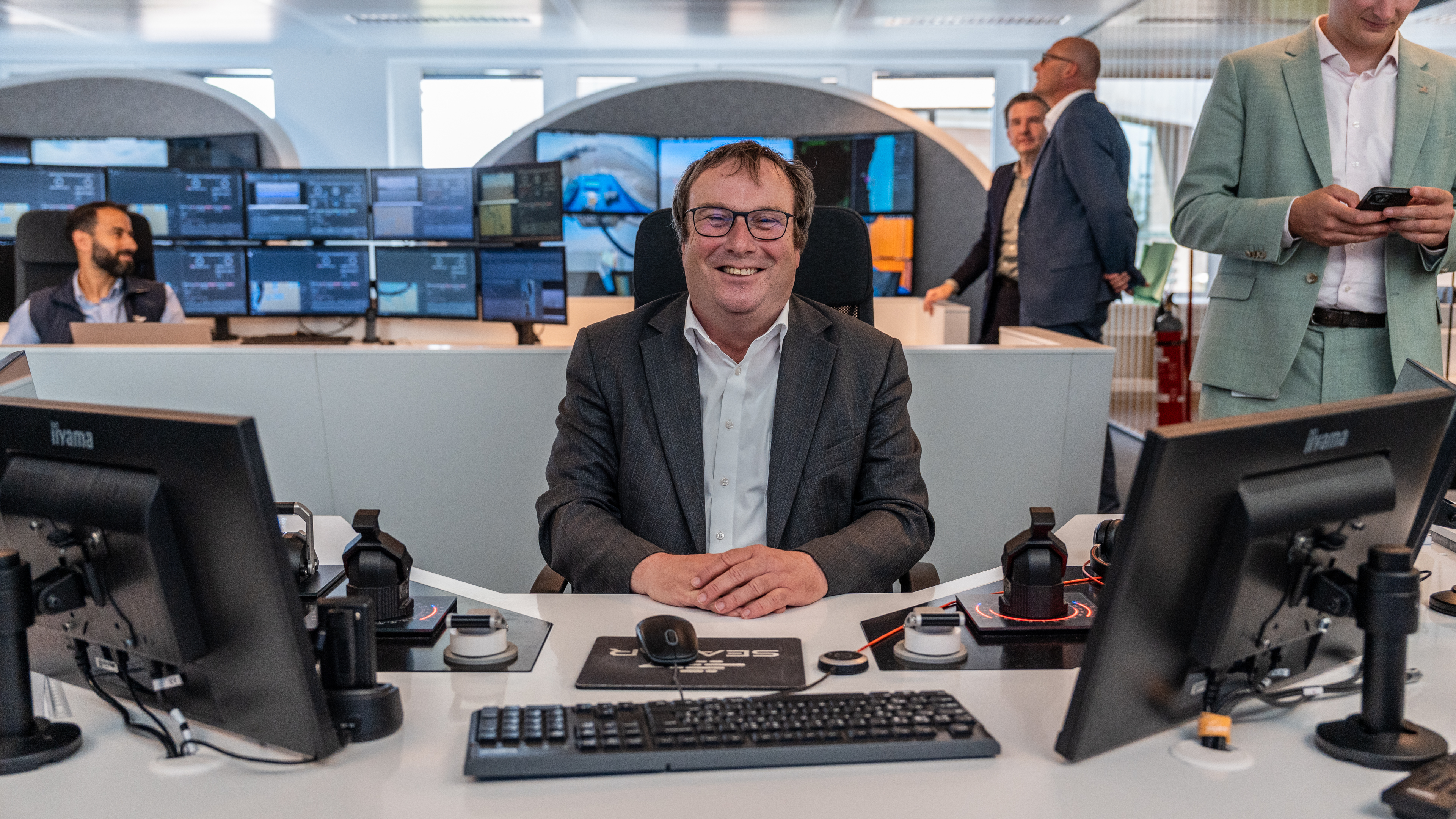
The Seafar stop opened in the central space, where the team gave a short introduction: who Seafar is and why remote inland shipping matters. This set out the case that the sector's structural shortage of boatmasters calls for a different operating model, one where vessels can be supported from shore.
The visit then moved to the Remote Operations Center, the heart of how remote sailing works. Here the Minister saw a live demonstration of inland vessels being navigated from shore by Remote Operators, followed by questions on how remote operations functions in practice, from the onboard systems and secure connectivity to the certified operators and regulatory approval that make it possible.
In their words
The Rhine only works if the whole corridor works, and that takes cooperation across Belgium, the Netherlands and Germany. Showing Minister Krischer remote operations first-hand is a chance to demonstrate that the technology to keep inland shipping crewed and moving already exists, today, from shore.
The bigger picture
The visit fits a wider shift. The waterway is going digital from two directions at once: the network, through remote-controlled locks, bridges and digital traffic management, and the vessel, through remote operations. When a port authority like Port of Antwerp-Bruges brings ministerial leadership from a key Rhine region to see shore-based vessel operation first-hand, it signals that both halves of that shift are being taken seriously. Seafar's role is the vessel side, and it is one part of what safeguards the future of inland shipping.
Seafar thanks Port of Antwerp-Bruges for organising the visit and for including us on the programme.