The Waterway Is Going Digital From Both Sides
Flows reports on the digitalisation of the inland waterway network in Flanders, and names Seafar as a smart shipping pioneer. The network and the vessel are now going digital together.
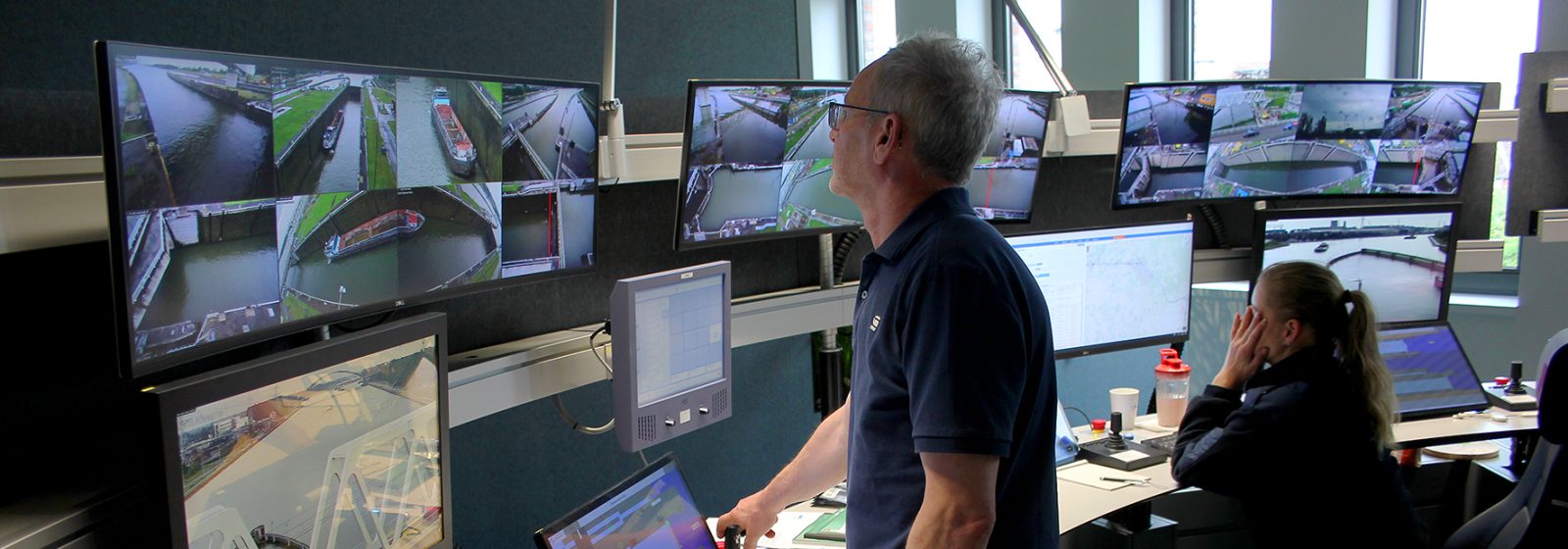
A recent feature in the trade publication Flows set out how digitalisation is reshaping inland shipping in Flanders. It describes remote-controlled locks and bridges, a digitised inland shipping desk, and vessels operated from shore. De Vlaamse Waterweg is driving the digitalisation of the waterway network itself, and the article names Seafar as a pioneer in smart shipping technology.
Being named alongside the network operator is worth pausing on, because it points to something bigger than either party on its own. The waterway is now going digital from two directions at once: the network and the vessel.
Two halves of the same shift
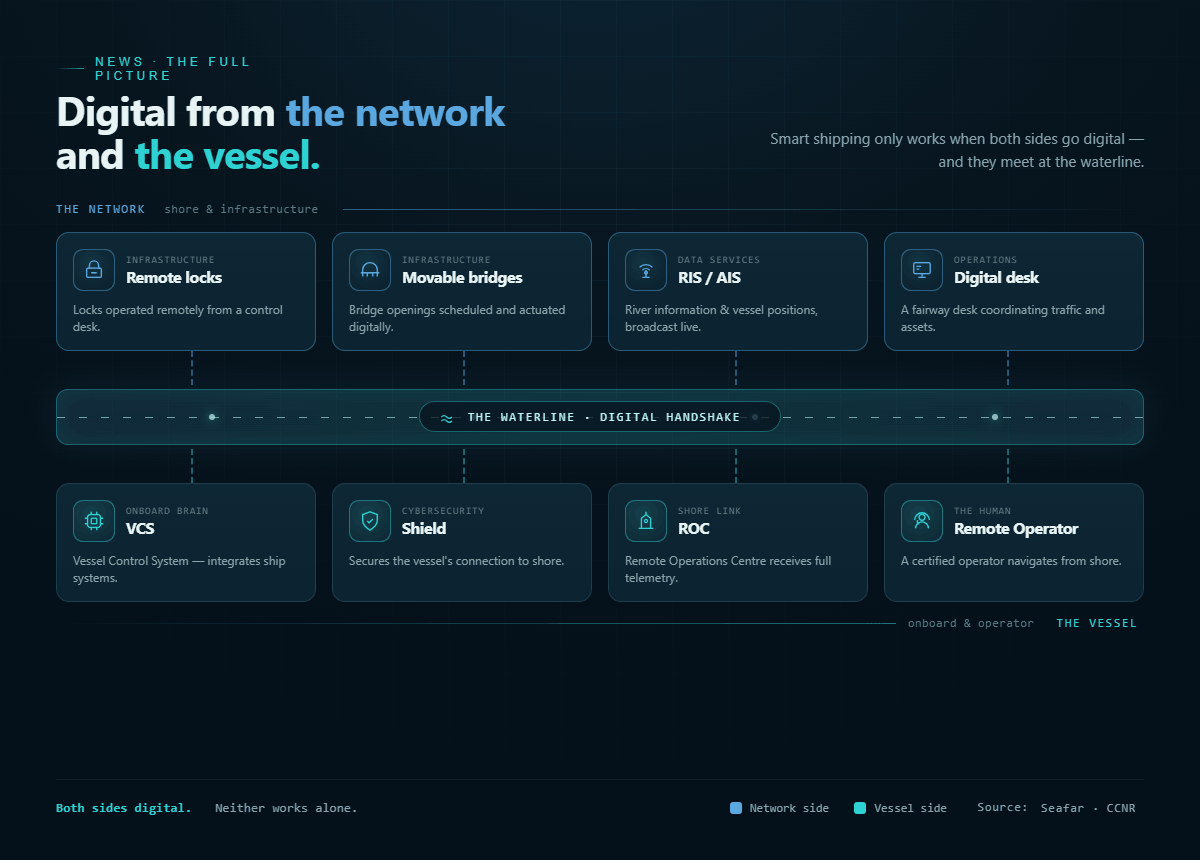
For most of its history, inland shipping treated the waterway and the vessel as separate worlds. The infrastructure, locks, bridges and traffic management, was operated by the authority. The vessel was operated by the captain onboard. The two coordinated by radio and routine, but each was largely analogue on its own terms.
That separation is closing. As De Vlaamse Waterweg brings the network's infrastructure under remote and digital control, the environment a vessel sails through becomes something that can be read, coordinated and managed as data. And as vessels themselves become capable of being operated from shore, the vessel becomes part of that same connected picture rather than a self-contained unit passing through it.
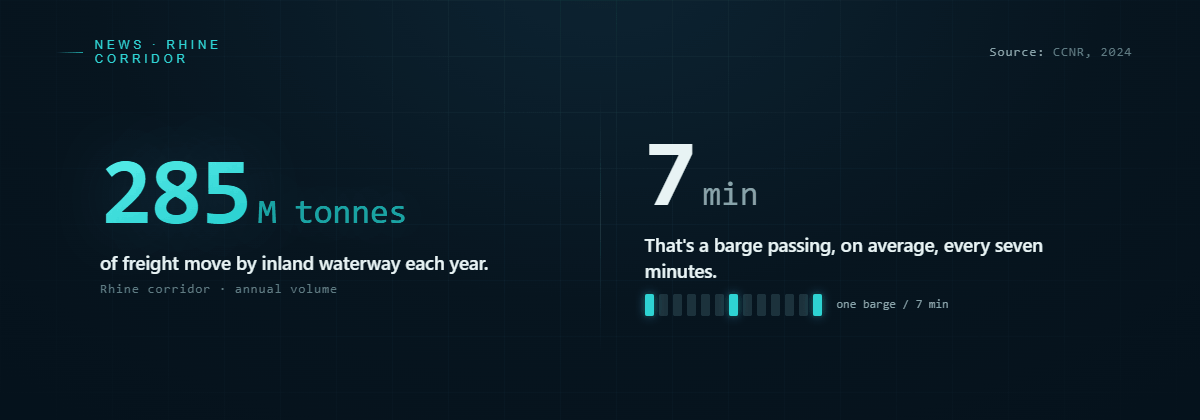
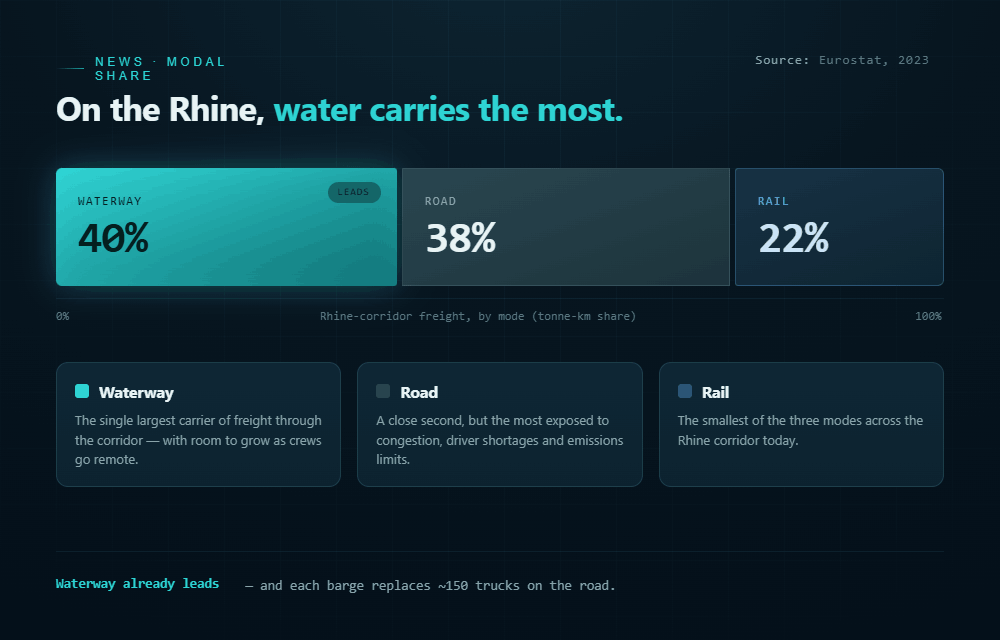
The Rhine carries around 285 million tonnes of freight a year, making it Europe's busiest inland waterway. Near Duisburg, a barge passes roughly every seven minutes, day and night. On the corridor between Rotterdam and the German-Swiss border, inland waterway transport holds about 40% of freight by tonne-kilometres, ahead of road at 38% and rail at 22%.
A digital network and a digitally operable vessel are two halves of the same shift. Each is more valuable when the other exists. A remote-controlled lock matters more when the vessels approaching it can be coordinated as connected systems. A vessel operated from a Remote Operation Center benefits from a network whose infrastructure can be read and managed in real time.
Where Seafar fits
Seafar's role in this picture is the vessel side of the equation. Through its remote operations platform, inland vessels are connected to shore-based Remote Operation Centers, where trained Remote Operators support navigation in real time. Remote-operated vessels are already sailing in commercial service, including the first remote-operated vessel in Belgium and the first on the Rhine.
What makes remote operations work is not the technology alone. It is the combination of onboard systems, secure connectivity, certified operators and regulatory approval to operate a vessel from shore. That operational and regulatory layer is what turns a connected vessel into one that can legally and safely sail with reduced crew onboard. It is also what makes the vessel side compatible with a digitising network: both are being built to be coordinated, monitored and governed as connected systems rather than isolated ones.
Why it matters for fleet owners
For a fleet owner, the significance is practical. Inland shipping faces a structural shortage of qualified captains, and the traditional operating model is reaching its limits. A waterway that is becoming digitally coordinated, travelled by vessels that can be operated from shore, is the environment in which fleets can keep sailing despite that shortage. The digitalisation Flows describes is not a distant vision. It is the operating context taking shape now, on the corridors these fleets already use.
Coverage like this is a useful marker of where the sector is heading. When the network operator and a smart shipping provider appear in the same story, it signals that inland shipping's digital shift is happening on both sides of the waterline at once. Seafar's work is one half of that. The result of the network and the vessel moving in the same direction is what safeguards the future of inland shipping.
Original article
Read the full article on Flows