De Tijd: A Skipper at the Office, and What the Drought Really Exposes
De Tijd visited our Remote Operations Center in Antwerp and looked at what low water on the rivers means for an industry that already lacks qualified skippers.
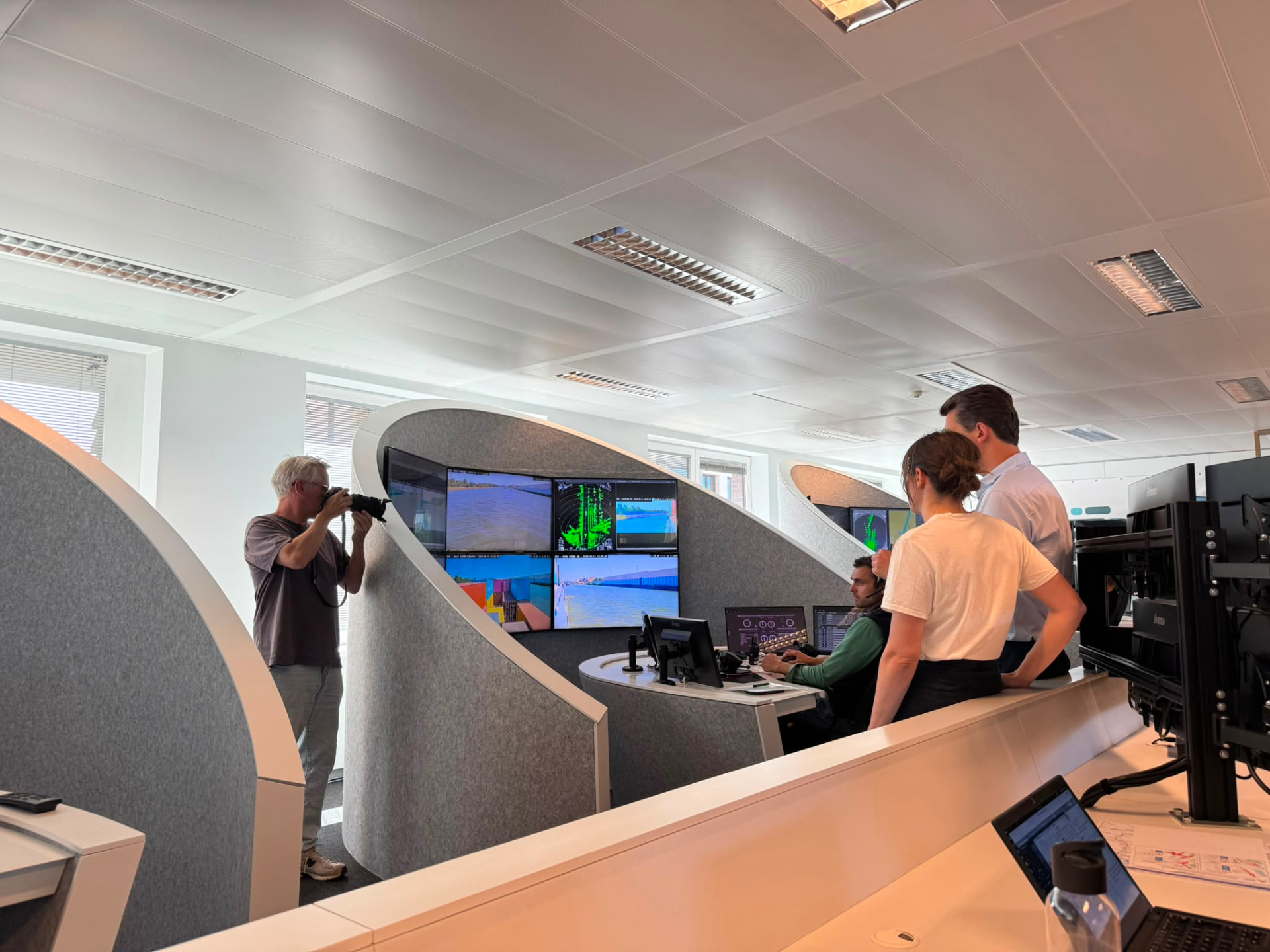
On 14 August 2026, De Tijd published a report by Marie Van Oost from our Remote Operations Center in Antwerp. The piece follows a skipper with fifteen years of experience who is navigating a vessel that is sailing somewhere else on the European network, and asks what that shift means for inland shipping.
What the article describes
The occasion is the dry summer. When water levels drop, vessels can only load a part of their usual cargo. The same volume of freight then requires more voyages, and more voyages require more sailing hours. The article looks at who is supposed to sail those extra hours in a sector that has been short of qualified skippers for years, and at the role shore-based navigation plays in that.
Regulation is part of the story as well, including the point that a qualified person remains responsible for the vessel, also when that person is not physically onboard.
Why it matters to us
Drought is not the main reason customers come to us.
That is the essence of it. Customers come to us because of the crew shortage, not because of the water level. What the drought does is make that shortage visible faster: the same group of people is asked to sail more hours for the same volume of freight. The low water is the trigger, not the cause.
The article is behind De Tijd's paywall, so we cannot reproduce it here. The link below leads to the original.
Original article
Read the full article on De Tijd